Author: Sarah Jefford

Fair Maidens and Cowboys – Part 1

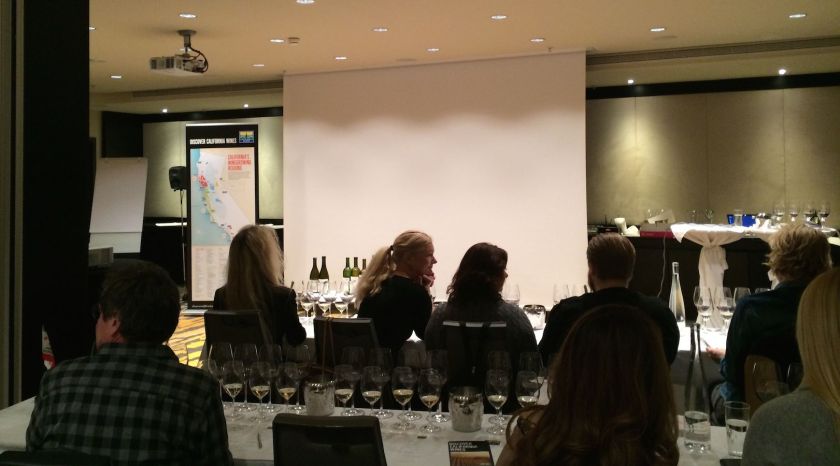
Stockholm has a lively drinks and restaurant scene. Nevertheless, the city is fairly small and consequently the number of trade and tasting events that occur here are quite limited. Earlier this month, however, not only one but two tasting events took place in the same week – luckily not on the same day. Each set up was totally different in style to the other. The first event was organised by Lars Torstenson and his team at Terrific Wines. A charismatic, maverick Swedish winemaker, he spent many years in the South of France producing idiomatic wines. Nowadays, as well as making wine, he consults all over the world and imports wine to Sweden. And he writes, quite a bit, mostly books on wine. He also publishes a daily blog (www.vinifierat.se), humourous, rock’n’roll, at times irreverant yet topical. In the second week of March he showcased a selection of his wines. He did better than that however, he invited winemakers along to present them. He may also be promoting women and wine, or maybe he simply enjoys …

Pushing the limits – Grape growing and winemaking in Sweden

A few weeks ago I met successful asset manager Christer Wachtmeister for a coffee in Stockholm. The reason for visiting him was to find out about his hobby: grape growing and winemaking in Sweden. If some years ago the idea that grapes could grow in Sweden might have seemed far-fetched, today with global warming and a thriving sparkling wine production in the United Kingdom, Swedish wine comes as no real surprise. According to the Swedish monopoly Systembolaget, it is thought that there are now approximately 40 hectares of land under vine cultivated by some 250 producers. Official figures for 2009 from the Swedish Board of Agriculture state that Sweden produced 17’859 litres of wine for commercial use (6’695 litres of red, 7’737 litres of white and 3’427 litres of rosé wine) from a vineyard area of 20 hectares. Most of the vineyards are situated in the south of the country in Skåne (the southern tip of Sweden) and on the islands of Öland and Gotland (in the Baltic sea off the south-east coast). There are a …

Scandinavian food on the cutting edge – Oaxen

Last week, life could hardly have got any better: I dined out on consecutive nights in two of Stockholm’s top restaurants. Scandinavians certainly have more than one string to their bow. If they are the undisputed masters of design, they also excel in the art of cooking. The outcome as a diner is that you not only get to eat fantastic food but it is also beautifully presented and you enjoy it in a designer setting. Every item, from the cutlery to the wall panelling has been carefully selected. At present, nordic cuisine seems to be leading the world and has tapped into prevailing concerns and taste: Scandinavian chefs are working with seasonal and organic local produce, and are coming up with dishes of the utmost creativity and quality. Unexpected subtle flavours are combined, yet the final blend maintains a strong nordic identity. It is terroir at its best. On Thursday evening I made my way through the snow over to Djurgården, to the edge of the island opposite the shipyards of Beckholmen and entered into the …

Stockholm – Eriks Bakficka

Trettondedag Jul (epiphany) was celebrated last Tuesday and the festive season is now officially over. Quite a few tired-looking Christmas trees are still on display, along with some advent lights, and this week-end many Trettondedag concerts have been taking place. However, as of now, it is in fact back to business. The good thing about this is that the restaurants that had been closed over the holidays are finally opening up again… Just behind Strandvägen, up from the water’s edge in the district of Östermalm, Eriks Bakficka has everything you would want your local restaurant to have. Not too big (it seats 90 guests in different dining areas), it is cosy and its atmosphere is relaxed and friendly. The service is topnotch and the food is homely with traditional Swedish dishes as well as modern cuisine. The à la carte menu changes every couple of months or so whilst classic Swedish dishes are a staple offering. There is also a plat du jour on week days and a weekly special. The wine list has a good selection of wine by the glass and …

Stockholm – Lights and mulled wine

Up here in the North the cold and darkness have firmly set in. The days now start in the dark and by 2pm the light is beginning to fade. Thick coats and gloves are a necessity. To counter this gloominess the Swedes have lamps on all their window ledges to softly brighten up their houses. In Advent the atmosphere is especially cosy with candles and illuminated red or white paper stars hanging at the windows, fires roaring in wood stoves and much drinking of mulled wine, here called glögg (from glödga “to heat, to mull”). Mulled wine is a tradition that goes back to the Middle Ages. Spices and heat enhance the warming effect of alcohol and improve a poor wine’s drinkability. Red wine is usually used for mulled wine and the traditional spices are cinnamon and cloves. Mulled wine – Glühwein in German and vin chaud in French – is enjoyed during the Christmas and New Year festivities but also whenever the weather calls for a hot, sweet, alcoholic beverage. In the mountains, on the slopes, it is …

The close of the Indian summer

The weather was breaking as were the dynamics of the vintage. The intensity of the work and the intimacy of the relationships amongst the team members was soon to dissipate and morph into aloofness. Many of the harvesters were planning their next move, others were waiting to resume a more viable everyday life. Colds were flying about the winery. Meanwhile many of the wines were nearing the end of fermentation and preparations were being made for their transfer into new vessels. The used empty oak barriques were taken out of storage and wheeled outside in front of the winery. There, they were filled with water, emptied, steam cleaned and rinsed out, ready to receive the new wine. Water from the barriques was tasted to make sure that the wood was not imparting any unpleasant flavours and to correctly match the barrels to different wines. New barriques were also prepared and selected according to cooperage and toasting.       In the winery the whites were progressing nicely. Fermentations this year started off particularly quickly. Vats big and …

Harvest time at Domaine La Liaudisaz

The next couple of days rain loomed on the horizon and the impending question was whether to pick the grapes or give them extra ripening time. The ideal scenario is to leave the grapes on the vines for them to reach greater ripeness, to know precisely when the rain is going to fall and have the grapes picked and in the winery just before the clouds break. Any benefit from longer hang time would be dashed by unexpected rain as this would provoke loss of sugar and grey rot. After much tergiversation Marie-Thérèse Chappaz decided to harvest her Syrah and Cornalin. The pickers duly worked on both Saturday and Sunday to beat the rain and thereby created a slight fluster in the village: a local resident came flapping into the vineyards in her dressing gown to complain about the noise, and at midday as the crates were loaded onto the back of the truck, a relatively young man standing on his frontdoor step asked us to lower our voices… With most of the vineyards harvested, the …

Leaving town – Off on a harvest

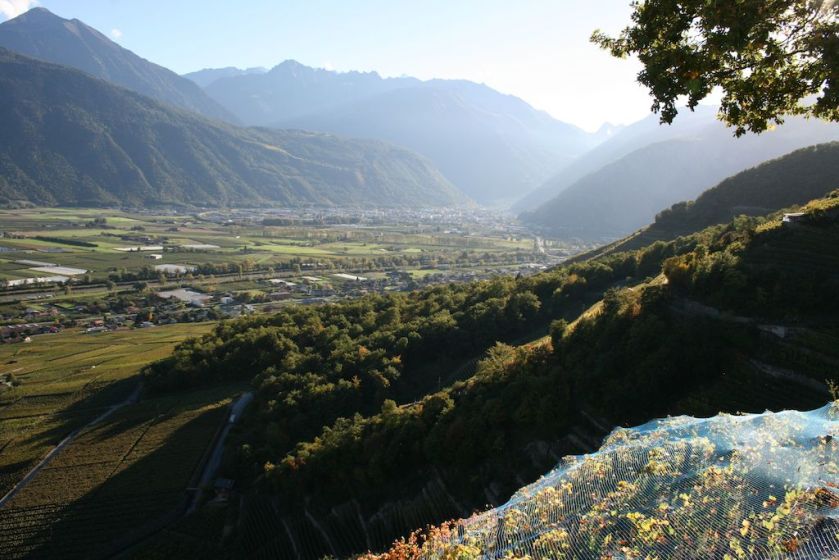
On the 10th of October I packed my bags and set off for the Domaine La Liaudisaz, in Fully, in the Canton of Valais, in Switzerland. The Domaine is the property of Marie-Thérèse Chappaz, an amazingly charismatic and talented woman, a true “vigneronne” who not only makes wines but also tends to her vines. This she does with formidable determination. Believing that the quality of her wines cannot exceed that of her grapes, she nurtures her vineyards as she would her own flesh and blood. Indeed, herbal teas and bicarbonate of soda are a few of the preparations she administers to her vines, having embraced biodynamics some fifteen years ago. If her wines are phenomenal, her vines radiate exuberance. In the summer, in particular, her vines stand out from those of others. Erect, lush, with vibrantly green and undamaged leaves the vines grow in symbiosis with their surroundings. Aromatic herbs such as thyme and hyssop mingle with wild strawberries, round-leaved pink geraniums, miniature pansies, poppies, grass and colourful flowers a plenty. Lizards, bees, grasshoppers, butterflies, …