Although only last week, Christmas seems quite far away. The supply of mince pies is low, and this year there was no Christmas cake nor log in our household to keep the Christmas momentum up. But maybe that is a good thing. After all, we are in a lull before the celebrations of the New Year and these are in a different register from those of Christmas.
At Christmas we celebrate the miracle that is the birth of Jesus, but also that of birth itself and of life. We give thanks for the gift of a child and the gift of procreation. Not only that, we also praise light. According to the Bible, “Jesus is the Light of the World”. This is beautifully recounted in Handel’s Messiah, traditionally performed at Christmas time, in the Bass Aria “The People that walk in Darkness have seen a great Light”.
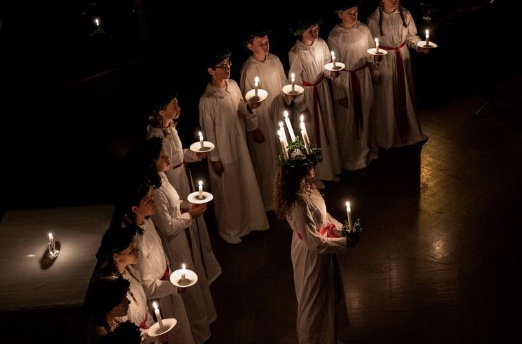
In Christianity, light is a symbol for God. But a few days before the birth of Jesus it is the shortest day of the year and the winter solstice. The end of the period of darkness has been celebrated throughout time and still is today. Festivities involve burning bright lights in the darkness, such as is done in Sweden on Lucia day (from lux, light in Latin).
Lucia – Photo from visitsweden.com
The Christmas experience is wonderment, gratitude and giving thanks, shared with family under candlelight. Inevitably, my choice of wine was affected by this mood and I sought out red wines that were appropriately complex, concentrated, traditional, mature and originating from properties or vineyards that were tended through generations: Bordeaux Grands Crus Classés. Premiers or Grands Crus Burgundies would have been just as suitable, albeit slightly less affordable.
By the time New Year’s Eve comes around the atmosphere has shifted from inner contemplation to external exuberance. New Year festivals that take place all over the world are some of the oldest and date back to the Babylonians in 2000 BCE. Interestingly, the date of the New Year has varied from one culture or religion to another and has also moved around throughout history. In ancient times the autumn equinox (Egyptians, Phoenicians, Persians) and the winter solstice (Greeks) were when a new year began. In the early Middle Ages in Europe, as a result of the spread of Christianity, it was celebrated on the 25th of March, the date of the feast of the Annunciation which is at once the day of Christ’s creation and of his death. It wasn’t until the adoption of the Gregorian Calendar in 1582 that the date for the new year in Catholic Christendom was set (or reset to be more precise) to the 1st of January. Further emphasizing this transition from the old to the new, from the past to the future, is the name of this first month. It comes from the Romans’ god Janus, who has two faces that look in opposite directions.
Janus the God, Sebastian Münster, 1559 (from Wikipedia Commons)
New Year symbolism remains intertwined with that of the Christmas story with birth and renewal, and the transition from darkness to light with, however, a more marked connection with new and recurrent beginnings and the moon. New year cycles have been deemed to start with the new moon close to the spring or autumn equinox, as was the case in Babylonia and Assyria respectively, in 2000 BCE. Many Asian countries, such as China, use a lunar calendar based on the cycles of the moon and their new year thus begins on the first new moon in their year.
New Year resolutions, which include the creation of new habits and self-improvement, sound resolutely contemporary. They could have been prompted from reading such books as “Atomic Habits” by James Clear and “The Seven Habits of Highly Effective People” by Stephen R. Covey. In fact, resolutions for a new year date back millennia and were carried out to receive good things from the gods.
In spite of Janus looking both back and forward, the focus of New Year festivities is firmly on the future and on chasing away the memories and aura of the previous year. Noise can help with that and features in the celebrations, in the form of fireworks, merriment and exploding champagne bottles.
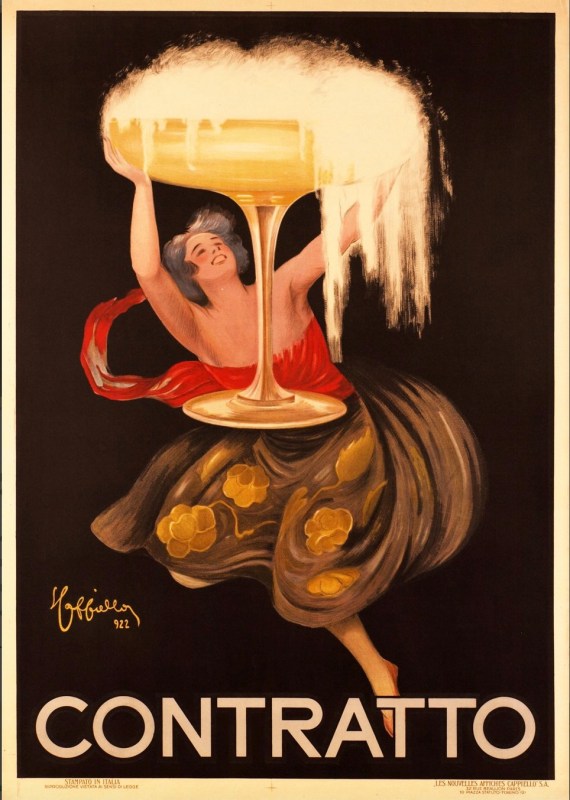
And so here we come to the best drink for the 31st of December and it can only be sparkling wine or champagne. It represents all we are celebrating: light, life, renewal, humanity and the divine. These are all contained in the very essence of the wine. The pale colour and lively spherical bubbles evoke the moon, light and life. The taste of the wine fashioned by craftsmanship and traditions embodies renewal and humanity. As for the divine, it can be witnessed as much in the winemaker’s strive to achieving perfection as in the gift of enjoyment granted to humans.
Leonetto Cappiello, 1922
If old customs are to be believed, wearing red undergarments on New Year’s Eve brings good luck as does eating certain foods such as green cabbage. Furthermore, what you do on New Year’s Eve also determines how your year will unfold. You have been warned.
So that is me set for the evening. I am going to pop that cork and make sure that the bottle is an exclusive one, thus setting the trend for the year to come.
Happy New Year you all and may 2024 bring you good health, prosperity and happiness!
The 16th was the 3rd Thursday of November, and as written in this week’s edition of Time Out magazine “a pretty big day in the wine world”. It is indeed Beaujolais Nouveau Day, the day when the new vintage of Beaujolais Nouveau wines hit the shelves of wine shops all over the world. This date has reached such fame that you do not have to be an oenophile nor a francophile to know about it and the catchy slogan announcing it: “Le Beaujolais Nouveau est arrivé”.
In many countries the arrival of Beaujolais Nouveau is a real day of merrymaking. An online search will quickly show you a list of events and bars that are celebrating. In London, plenty of restaurants are cooking up special dishes to pair with the light juicy Beaujolais wines. Some are also hosting winemakers at their tables. The cult restaurant Noble Rot is one them.
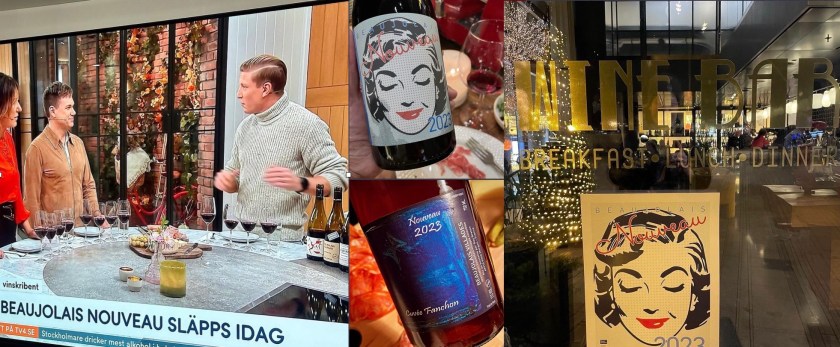
In Stockholm, Sweden’s capital and the area in the country where the most wine is consumed, Beaujolais Nouveau Day has caught on and is truly fêted. No sooner the wines get stacked in the monopoly’s temporary assortment that they are swiftly picked up by thirsty customers. Some wines, such as those of producer Jean Foillard, are eagerly awaited for and fly off the shelves. The French-Swedish Chamber of Commerce and the French Embassy host Beaujolais Nouveau wine tastings. Journalists are invited on morning television to present the wines and make suggestions for food pairings. As for wine bars, the third Thursday of November is an opportunity to add some cheer to the dark and cold winters and many therefore take part in the celebrations creating a party atmosphere throughout the city.
Party time for Beaujolais Nouveau in Sweden: on tv, social media and in Stockholm’s wine bars
Having recently moved to the French speaking part of Switzerland I have been scouring the internet searching for some events or bars that are celebrating Beaujolais Nouveau wines in the area where I live. To my surprise, I couldn’t find much. So I drove down to Nyon, a small town but located in a region that has become very international, and dropped into bars and independent wine merchants. My request for Nouveau was met with offers of Bordeaux or Swiss wine until finally, I came across one Beaujolais Nouveau in the city centre’s supermarket.
Beaujolais Nouveau 2023 Georges Duboeuf. The latter, the “pope” of Beaujolais greatly promoted Nouveau wines internationally
The CCI France Suisse Chamber of Commerce had an event on the 16th of November but advertised it as “Beaujolais Pas Nouveau”. Photos from the previous year’s event showed that it was not Beaujolais Nouveau wines that were served but Beaujolais crus such as Morgon, Fleurie etc… Furthermore, the wines were from older vintages. Tellenne-Duguet Moulin-à-Vent 1966, Château Thivin Côte de Brouilly 1997 and Domaine Chignard Fleurie 2009 were three from the line-up. This is Beaujolais crashing Nouveau’s party. Has Beaujolais Nouveau lost its appeal in Switzerland or is it more of a big city crowd-pleaser?
Love me Love me not – Pas Nouveau vs Nouveau?
Beaujolais Nouveau wines are made under the Beaujolais and Beaujolais Villages appellations that cover a vineyard of 8’000 ha. The grape variety used is the black Gamay Noir à Jus Blanc, a natural cross between Pinot Noir and Gouais Blanc. However, up to 15% of other grape varieties both black and white are permitted (Chardonnay, Aligoté, Melon, Pinot Gris, Pinot Noir, Gamay de Bouze and Gamay de Chaudenay – with the latter two varieties only allowed up to 10% of the total blend either alone or together). The winemaking process is quick, with extraction focused on flavours. The wines present very low tannins, flavours of “bonbons anglais” and juicy berries (strawberries, raspberries, cherries), a light body, some acidity and moderate alcohol. These features make them easy to drink wines, so-called “vins de soif”. They are also inexpensive. Bottled a few weeks after the grapes are picked and straight after fermentation, Beaujolais Nouveau wines are the first wines of the current harvest.
In 2022, Beaujolais, covering 12’520 ha all appellations included, produced 510’000 hectolitres of wine equivalent to 68 million bottles. Of the 68 m bottles, Beaujolais AOC produced 19.6 m, Beaujolais Villages AOC 16.8 m and the 10 Beaujolais Crus 31.6 m bottles. Nouveaux wines accounted for roughly 25% of total production with 124’000 hectolitres (16.5 m bottles). France kept 10 m bottles and the remaining 6.5 m bottles were exported to over 100 countries around the world. The biggest fans of Nouveau are the Japanese that imported 17’500 hl (2.3 m bottles), followed by the USA with 8’900 hl (1.2 m bottles), the UK (707’000 bottles), Canada (330’000 bottles), Belgium (200’000 bottles) and Germany (160’000 bottles).
For Beaujolais, the biggest export markets are the USA with 44’330 hl (5.9 m bottles), the UK 28’610hl (3.8 m bottles), Japan 19’814 hl (2.6 m bottles), Canada 18’768 hl (2.5 m bottles), Belgium 13’983 hl (1.9 m bottles) and the Netherlands 6’112 hl (815’000 bottles). Interestingly, the countries that import the most Nouveau also proportionally import the most Beaujolais. The exception being Japan that has a clear penchant solely for Nouveau, probably as the fruity, low tannin and light-bodied wine is well suited to its palate and cuisine.
Beaujolais offers a range of different styles of wine from the fresh, fruity, vibrant, glistening, shiny new-born bojo nouvo to the age-worthy crus, not to mention natural wines. Celebrating Beaujolais Nouveau on the 16th of November not only promotes that category of wine but also brings awareness to the other appellations of the region. The early sale of wine is also of economic importance, bridging the gap with Beaujolais wines of a different style that are released later or after a period of maturation.
The mid-November date for celebration happens to come shortly after festivals linked to the end of the agricultural year such as harvest festival and Saint-Martin (11 November), which is celebrated in countries such as Germany, the Netherlands, Belgium, Switzerland and Scandinavia (gåsamiddag). It is not surprising that quite a few of these countries are proponents of Beaujolais Nouveau. What better way is there to welcome the winter in than by celebrating in the company of friends with a glass of light, juicy, fruity wine and a plate of charcuterie and cheese?
Rioja is one of the classic wine-growing regions of the world. Home to producers such as La Rioja Alta, Muga, Beronia and Campo Viejo, to name a few, Rioja’s reputation as a region that produces wines of quality is firmly established. In 2021, the production of Rioja DOCa was 350 million bottles, of which the considerable amount of 41.6% was exported. Aged wines represent 57% of Rioja’s output. The majority of the wine is red (85%). White represents 9% and is a growing category.
Classic Rioja wines
Consumers worldwide have become familiar with the different styles and quality levels – Crianza, Reserva and Gran Reserva – based on the wine’s length of maturation. Rioja has made these wines easily identifiable on the shop shelf with clear front labels and colour-coded seals. Each level of ageing has its own organoleptic characteristics.
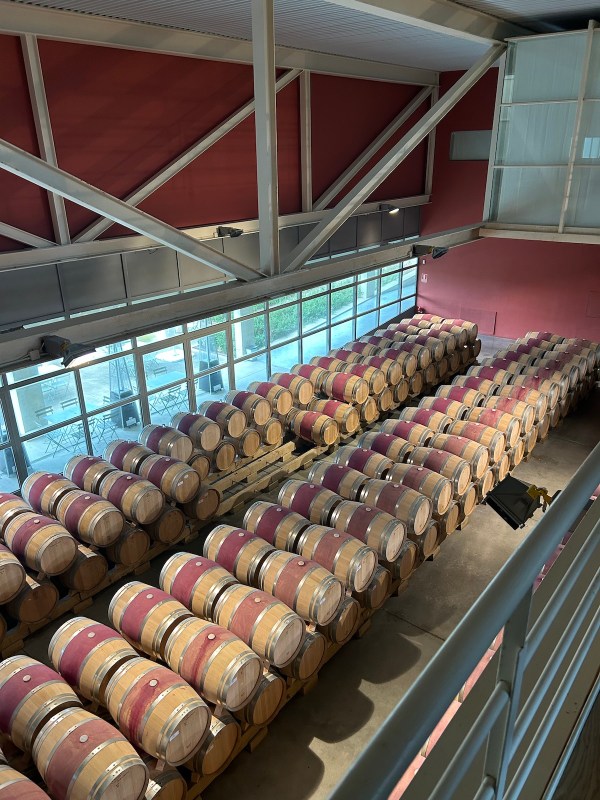
Barrel room at Roda, Rioja
A Crianza is a two year old wine that has spent some time in wood, 12 months minimum for reds and six months for rosés and whites. The attributes of a red Crianza are fresh, crunchy, and youthful red fruit with some spicy notes.
A red Reserva, aged for three years with a minimum of 12 months in barrel and six months in bottle, is a smooth, complex, velvety wine with aromas of red and blue fruit, spice and herbs. Whites and rosé wines age for a minimum of two years with six months in barrel. Expect a white Reserva wine to have a golden hue and a rich and smooth mouthfeel.
Bottle ageing at Campo Viejo, Rioja
Gran Reserva wines, at the top of the quality ladder, have aged for five years (reds) and four years (whites and rosés). Reds are required to spend a minimum of two years in barrel and two in bottle whereas for whites a minimum of six months in barrel. A Gran Reserva will typically show elegant notes of black cherry, cream, vanilla, coffee, prune, earth, balsamic vinegar, soy sauce, dill and coconut, with a delicate acidity and long length.
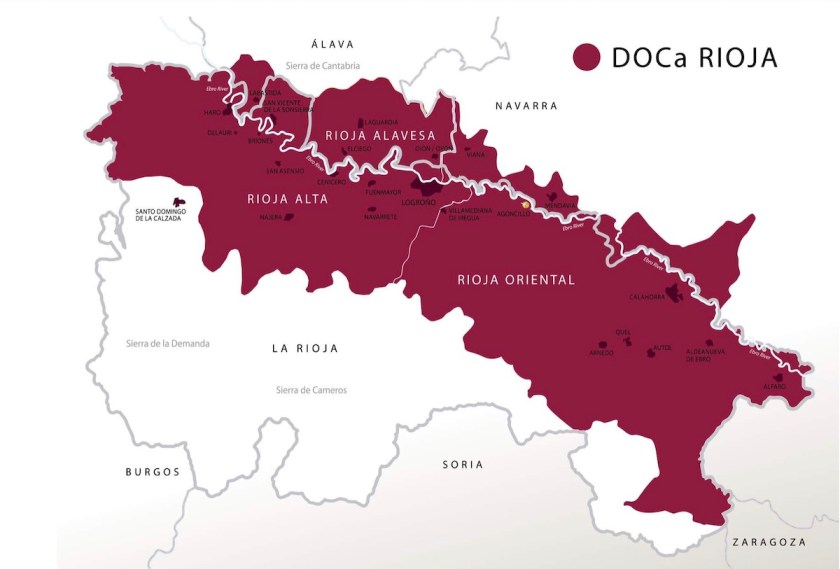
Longer maturation in barrel and bottle is a key factor in the appeal of Rioja wines. The latter are renowned for their consistency, their softness, complexity and aptitude for ageing. Through élevage tannins become softer and integrated, aromas more complex and the texture smoother. Blending is another tool that contributes to making a wine balanced and more layered. The grapes in a DOCa Rioja wine can come from different zones within the appellation, (i.e. from Rioja Alta, Rioja Alavesa and Rioja Oriental) a collection of diverse climates, altitudes and soils. The wines can be made from a blend of different grape varieties and in the case of reds from Tempranillo, Garnacha, Graciano, Mazuelo and Maturana Tinta.
The expression of terroir – Geographic indications
The tradition of blending different grape varieties, different regions and the maturation in barrels and bottle are factors that all play a part in the identifiable character of Rioja wines. It could be argued that the reputation of the wines from Rioja is more dependent on how the wine is made rather than on terroir. The know-how of blending and ageing quality wine in oak 225-litre barriques was brought from Bordeaux to Rioja by the innovative Marqués de Riscal and Marqués de Murrieta in the second half of the 19th century. Two centuries on and there is an interest and thirst for more terroir-driven wines and wines where the maturation vessel does not dominate over the provenance and essence of the grapes. In response to these trends, Rioja’s Consejo Regulador (Rioja’s regulatory body) has approved the geographic subcategories of Vino de Zona, Vino de Municipio o pueblo and Viñedo Singular. Vino de Zona (VZ on the seal) is the division of Rioja into the three regions of Rioja Alta, Rioja Alavesa and Rioja Oriental (the latter formerly known as Rioja Baja). Vino de Municipio allows for the label to carry the name of one of the municipalities (villages) approved by the Consejo. As for Viñedo Singular, this highly qualitative indication introduced in 2017 designates a single vineyard out of which distinctive wines are born. There are stringent requirements regarding, amongst other things yield, harvest and press ratio. The wines undergo a sensory test and the minimum age of the vineyard has to be 35 years. Unlike in Burgundy, for example, the plot of land has not been previously formally recognised as a Viñedo Singular. It is up to the grower or producer to apply to the DOCa Rioja Control Board and to show that all the conditions are met for the plot of land to be accepted as a Viñedo Singular.
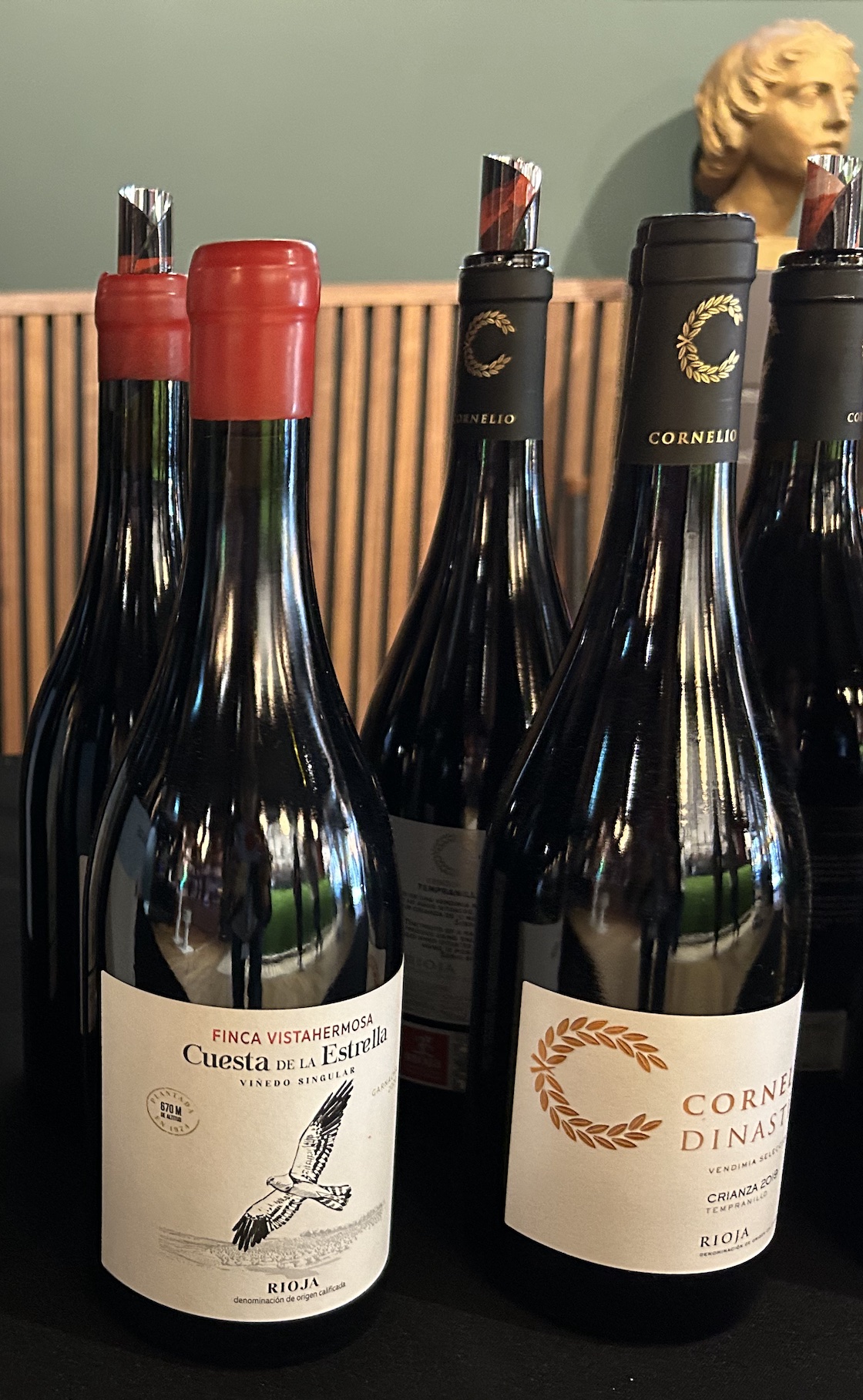
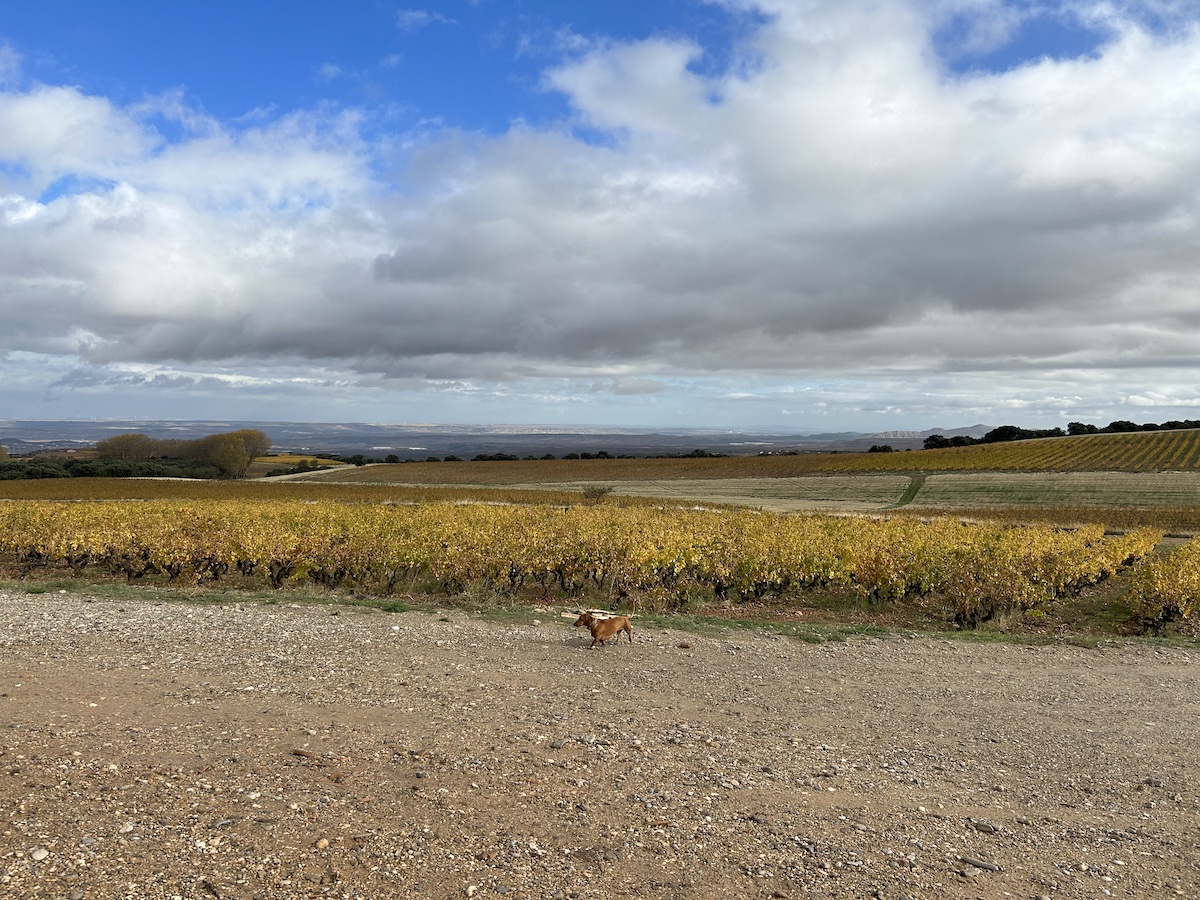
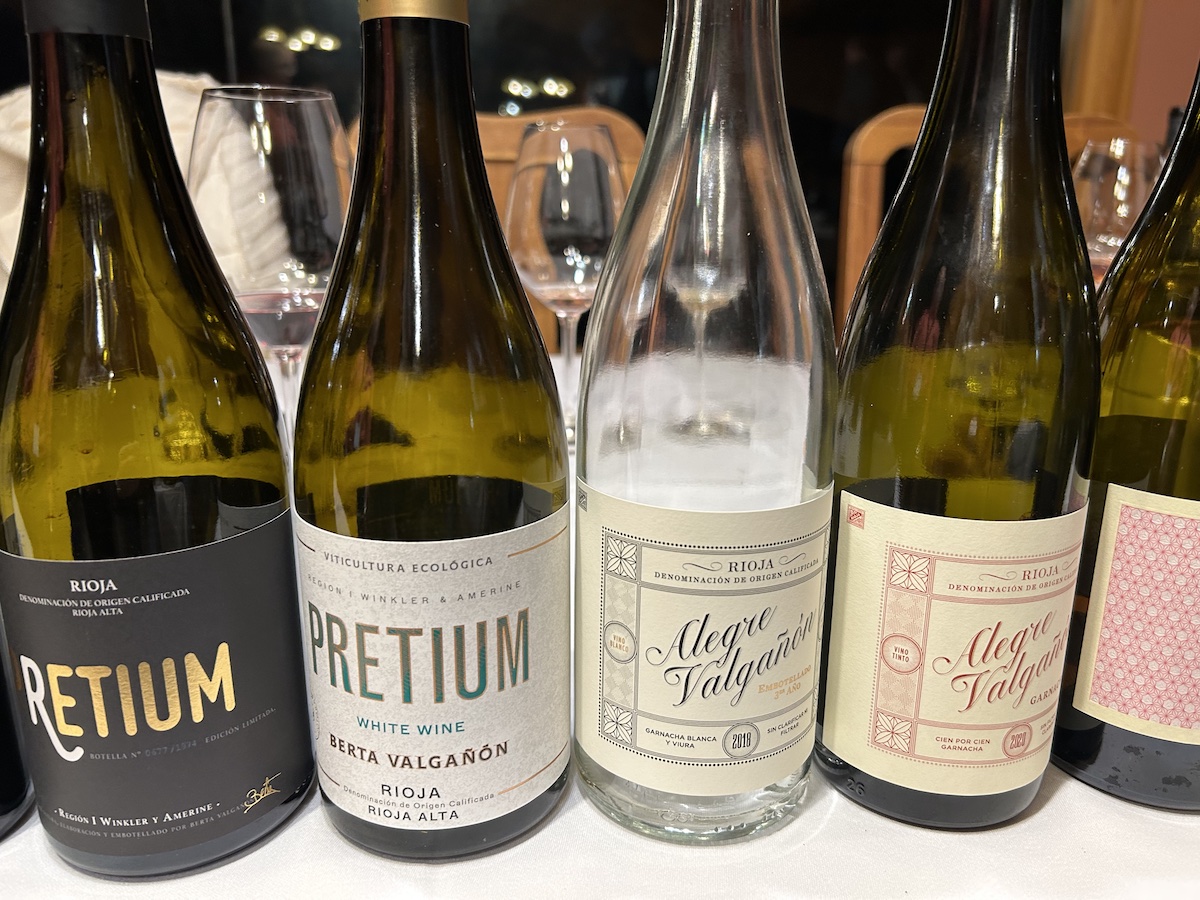
Views on these classifications are split. For Bodega Alegre Valgañon in Rioja Alta who make terroir-driven white Viura and red Garnacha wines in the Obarenes mountains, the subzones such as Rioja Alavesa, “means nothing and is merely a geographic boundary”. On the other hand, in Rioja Oriental the team at Finca Vistahermosa is fighting for their region and zone to be recognised. They sell their grapes to top producers such as Roda, Muga and Alvaro Palacios but as of 2005 have been making their own wine for their grapes to be appreciated at their true value rather than merely bring glory to the wider Rioja DOCa zone. The Hernais brothers, in Rioja Alta, put their top classic red, a blend of Tempranillo, Garnacha and Viura, and their white in the spotlight by bottling them under the Viñedo Singular appellation. The grapes come from a special vineyard, Finca la Emperatriz, once the property in the 19th century of the Empress of France. It is a cool location, 600 meters in altitude, with poor sandy alluvial soil covered in large white pebbles home to 50-65 year old bush vines. Their Viñedo Singular at 32 ha is the largest in Rioja. There is presently a total of 200 ha under the designation but surface area is growing along with interest from winemakers.
Maturation styles versus terroir – Inspiration from the past
The ageing categories, even when coupled with more narrow geographic sub-entities do not give some winemakers enough latitude to express terroir or simply to make the kind of wines that they would like to in the way that they would like to. An alternative is for them to bottle their wine under the generic Rioja DOCa appellation, appellation that does not carry any ageing requirements (green-coloured seal). In 2021, 43.25% of all Rioja wine produced came under the generic label, not an insignificant amount. Under that label a new wave of winemakers are striving to express terroir and are doing so by connecting back to farming methods and vinification methods that were used by prior generations. One vinification method that is making a comeback is carbonic maceration. Interestingly, although this technique is usually used to produce very fruity wines for early consumption, some winemakers use it for their structured, high quality and age worthy wines too.
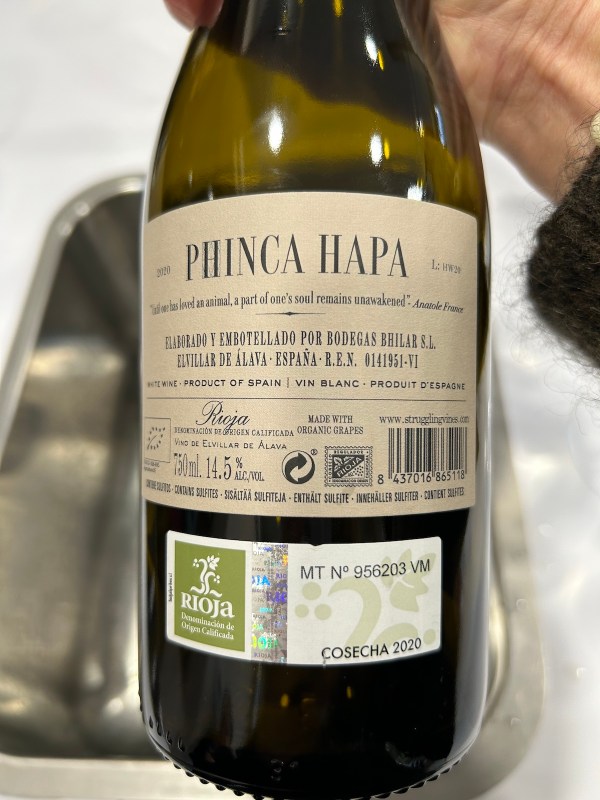
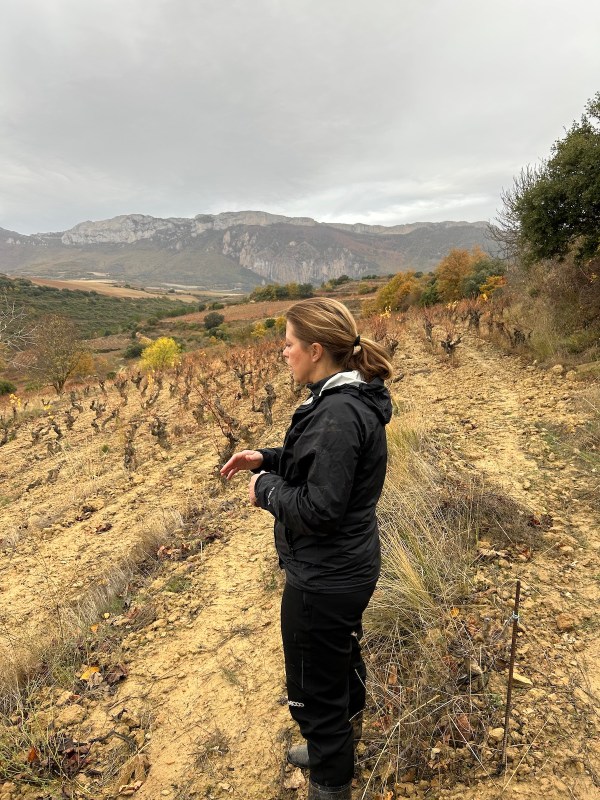
Phinca Hapa, white Rioja wineMelanie Hickman amongst her old vines that she rescued
Phinca Hapa white 2020 is a beautiful wine from Elvillar, Rioja Alavesa. A blend of Viura, Malvasia and Garnacha Blanca it expresses freshness, elegance, aromatics of stone fruit, wild herbs and honey. It is made by carbonic maceration. The winemaker, Melanie Hickman, explains why she chose that method and how she does it.
“Both our Hapa White and our Hapa Red are made in the same way. First of all there is a history of carbonic maceration in Rioja Alavesa. Second of all, all the wines made in the winery except for one, always have a little bit of skin contact. My husband and I were talking about what would happen with a longer skin contact but we didn’t want a maceration without fermentation to protect the grapes from any funky bacteria coming in and changing the wine. We wanted the wine to truly express the area of where it’s from”.
“What we do is that we take the whole cluster, put it into an oak vat, close it up and eventually when there is enough juice on the bottom – so it is sort of semi-carbonic maceration – we will pump it over as it is fermenting. When it is 80% fermented we press it and put it in foudres for one year”.
Melanie goes on to explain that in their winery they have no technology; they use oak, French oak and concrete vats with epoxy lining and minimal intervention. In terms of viticulture, they work with biodynamic farming. They have many old vines and one of Melanie’s projects has been, and is, purchasing old vineyards and restoring them to health by bringing back biodiversity, cultivating biodynamically and using horses instead of tractors.
The stunning Bodegas Ysios in Rioja Alavesa, Spain
At Ysios, the impressive futuristic winery designed by architect Santiago Calatrava at the foot of the Sierra de Cantabria in Rioja Alavesa, winemaker Clara Canals concurs that what is trending now is returning to the past and working with more neutral vessels, i.e. bigger barrels and concrete vats. There is a move away from wines with intense aromas of coconut or chocolate – the effects of maturation in heavily charred new American and French oak to better express terroir. In the vineyard, at Ysios, they have returned to a more basic way of doing things: dry farmed bush vines, no irrigation, regenerative viticulture and all the while reducing their carbon footprint.
Rediscovering grape varieties – grapes for the future
Rioja is often associated with oak but according to Professor Juan Carlos Sancha, a researcher and teacher at the University of La Rioja, Rioja did not use oak 150 years ago. Winemaker Javier Arizcuren from Sierra de Yerga in Rioja Oriental has also chosen not to use oak. Instead, he has aged his Solomazuelo 2021 in clay amphoras. According to him, this allows for the purest expression of the grape variety, which in this case is a single varietal Mazuelo – also know as Carignan. It is not usual to find single varietal wines in Rioja. The Solomazuelo has high acidity, deep colour, soft tannins and dark fruit, earthy, spicy and balsamic aromatics mingled with violets. Javier reveals that his grandfather worked with Mazuelo and that it used to be popular 150 years ago because of its abundant yields. The variety, which covers only 3% of the total vineyard area in Rioja, has high acidity, high tannins and ageing potential. Javier explains that in spite of the grape variety’s credentials it is sensitive to Oidium – a fungal disease which arrived in Spain before phylloxera, – and for that reason much of it was pulled out and replaced by Garnacha.
Mazuelo along with Graciano are grape varieties that are blended in small quantities with Tempranillo in the elaboration of classic red Rioja wines. Professor Sancha believes that Graciano, Mazuelo and Garnacha are the grapes best suited for climate change. Graciano, a late ripener, is an indigenous variety to Rioja and Navarra that brings perfume, acidity, colour and phenolics to a Tempranillo blend. With eyes on the future winemakers have definitely been paying the grape variety more attention.
Not so new after all – Espumoso de Rioja
Sparkling wine, a drink that the world does not seem to get enough of, might not be a category that comes to mind at the mention of Rioja. Cava is the word that is synonymous with Spanish traditional method sparkling wine. The Cava DO, however, unlike Champagne, does not designate one area of production only. The word Cava means cellar, and if 95% of all Cava is made in Calalunya, there are other locations in Spain that have the right to make Cava too. Rioja is one of them.
Rioja has a long experience of making traditional method sparkling wine. Mayte Calvo de la Banda, technical director at Bodegas Bilbaínas in Haro, recounts that her winery supplied sparkling wine to the Champagne region in the 1900s. The devastation of French vineyards first by the phylloxera louse in the 1860s then by the battles of World War I, which destroyed 40% of Champagne’s vineyards, prompted many winemakers to move to Rioja, and France to turn to the region for the supply of wines. Bodegas Bilbaínas produced its first traditional method sparkling wine in 1912, not long after the creation of the company. The wine was called Champagne Lumen. The name “Lumen”, light in Latin, is a reference to Haro which was one of the first villages in Europe to have electric lights in the streets.
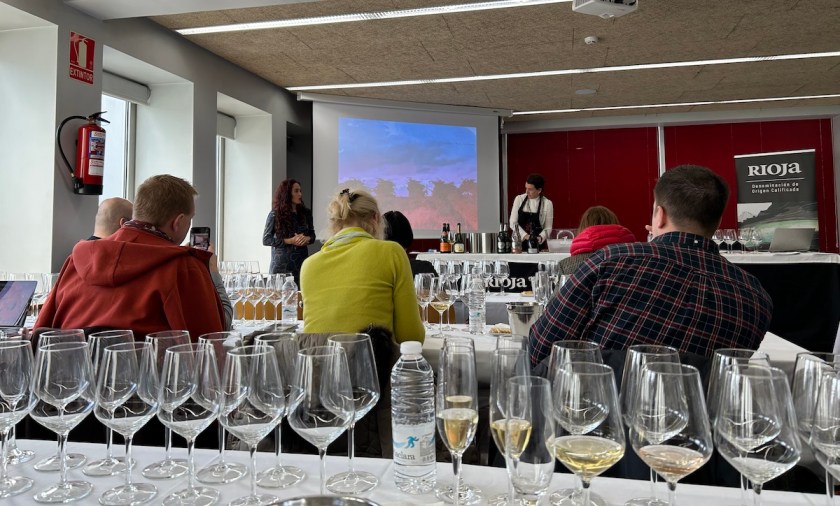
Rioja sparkling wine tasting
Following on the development of the traditional sparkling method category, which is anticipated to keep on growing and giving winemakers the chance to express their terroir, in 2017 Rioja included quality white and rosé sparkling wines in the appellation. Espumoso de Rioja DOCa is a little different to Cava. The finished sweetness level has been kept on the dry side and limited to Brut, Extra Brut and Brut Nature. The minimum ageing time is longer than the 9 months required for the Cava DO. It is 15 months for Crianza, 24 for Reserva and 36 for Gran Añada. Grape varieties are those permitted under the Rioja DOCa and the wine is the product of one vintage only.
Bilbaínas had been making Rioja’s traditional method sparkling wine under the Cava DO but adopted the Rioja DOCa in 2017. By doing so they are rightfully acknowledging Rioja for the tradition, expertise, and expression of traditional method sparkling wine. Their Lumen Brut Reserva 2018 is a Blanc de Noirs made 100% from dark-skinned Garnacha grapes. These were handpicked and harvested early from 20 to 30 year old bush vines growing at an altitude of 550 meters in the Najerilla Valley, a cool area with Atlantic influence. The wine is a delicate pale lemon with fine bubbles, lively acidity, fresh notes of citrus, red fruit, spice and toast.
Roman vestiges, Vivanco museum
Back to the Future
With winemaking beginnings dating back to Roman times, Rioja has a long history of being a world-class producer of wines. A region comprising 65,326 hectares of vines and spanning three distinct zones each with its own climatic specificities, Rioja offers a great diversity of styles, from red and white to rosé, youthful to ageworthy and still to sparkling. Whether it be their Viñedo Singular, their choice of winemaking techniques, their sparkling Espumosos, their renewed interest for lesser used indigenous grape varieties, producers are taking an innovative approach and meeting current market demands for more terroir driven wines, for sparkling wines and original grape varieties alongside the classic Rioja Crianzas, Reservas and Gran Reservas. Drawing inspiration from past generations, traditions and practices, producers are keeping ahead of trends and tackling issues such as climate change and a greener planet with wines that are relevant to consumers of today and of the future.
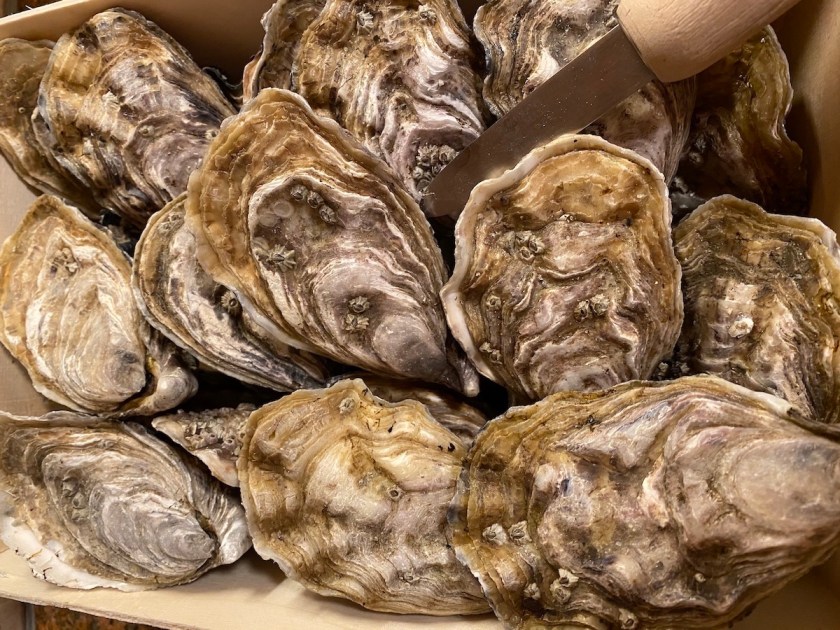
With it being the 31st of December and oysters featuring traditionally on the evening’s menu, two questions arise: which wine is the best match with raw oysters and how do we open them ?
Oysters are the perfect meal for convalescing according to an old French medical dictionary
When pairing food and wine there are a few general guide lines to follow:
find a wine that will not overpower what you are eating;
match (or contrast) the main features of the food/dish;
and not least importantly choose a wine that suits your budget and that you enjoy.
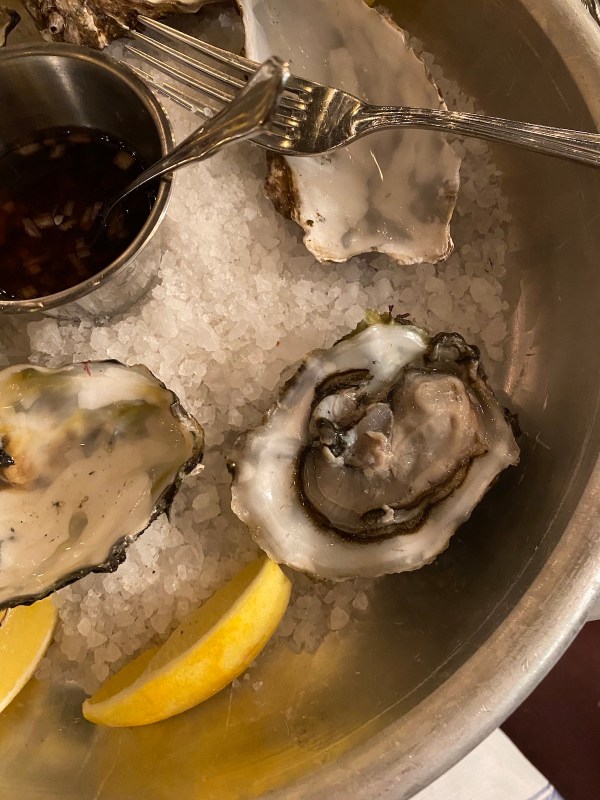
Raw oysters are just perfect served with a wedge of lemon, a vinaigrette with chopped shallots or with a drop of tabasco sauce
What are the main attributes of oysters? Undoubtedly their utter freshness above all things, as well as their lightness and their delicate mineral, salty taste.
You will want to choose a wine that shows the same characteristics as the oysters: a wine that is light, fresh with a clean finish, that will not override with power nor complexity the delicious, subtle taste from the sea.
So don’t think so much about the grape variety but more about the style of the wine. Your ideal wine should thus be dry, white, young, and unoaked with refreshing acidity. Many wines will fit that description and that leaves a wide choice of grape varieties and points of origin. Here are some classic suggestions of wines to choose from.
A Muscadet from the Loire Valley, France
A Sauvignon de Touraine, or another young Sauvignon Blanc from the Loire Valley such as a Menetou-Salon or a steely Sancerre
Gros Plan du Pays Nantais, from the Loire
A Chablis, from Burgundy, France
An Entre-deux-Mers, a Pessac-Léognan, a Graves, a Blaye – Côtes de Bordeaux, or a Bordeaux Blanc from Bordeaux, France
A Riesling from Alsace, France
From outside of France:
An unoaked Chenin Blanc from South Africa
A Pinot Gris from Oregon, USA
An unoaked Chardonnay from Sonoma, California
A Sauvignon-Sémillon or Chardonnay from Margaret River
And the list can go on…
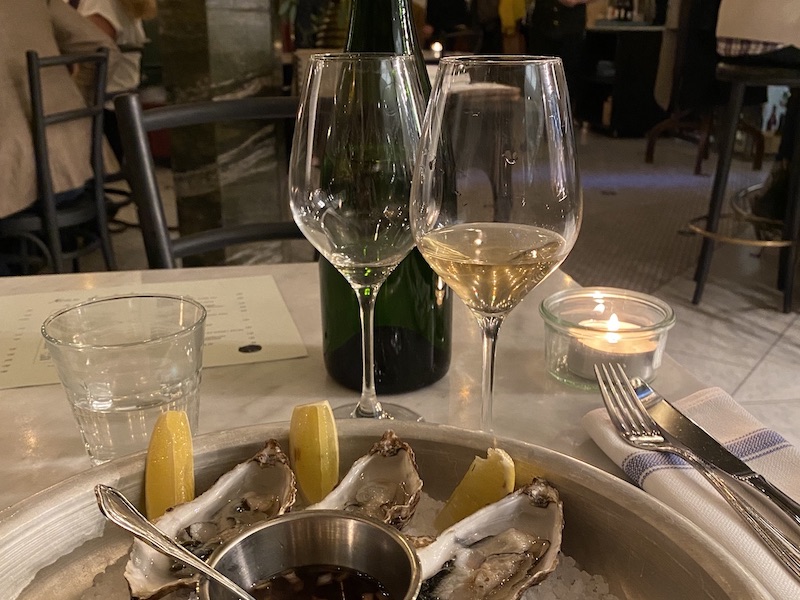
What about bubbles with oysters? Doubtful that a celebratory bottle of fizz won’t be opened on the 31st, so can it wash down the oysters?
If champagne is your drink of choice throughout the evening, select one that is as dry as possible and that has a high proportion of Chardonnay in the blend. An Extra Brut Blanc de Blanc will work nicely.
Now to opening the bivalves… I confess that I have until last year been nervous about doing it myself and have left the feat to others.
I found out, however, that – holding the oyster steady under a folded tea-towel with your hand in a thick leather gardening glove whilst your other hand prises the oyster open – does the trick!
Sushi Sho has been for some years now on my “must-go-and-eat-there-before-I-die” list or, if that sounds rather unnecessarily tragic, on the “must-go-and-eat-there-before-it-closes-down” list. I say that because I never made it to Fäviken to partake in Magnus Nilsson’s edible artistry before it closed. That is one of my big regrets.
Back to Sushi Sho.
I was commissioned recently to write an article on sake, so I seized the occasion to venture down to this much talked-about restaurant whose traditional Tokyo-style sushi have been making waves in Stockholm since its launch in 2014. I threw to the wind the idea that feasting in a one Michelin star warrants either a celebration, or diners-in-crime, or the end of the week, and rocked up on my own, casually, on a very cold Tuesday night.
The restaurant is located in Vasastan, right opposite Bacchus Antik, an antique shop I used to love spending time in when visiting Stockholm, in the days before I settled here. The shop is crammed full of Scandinavian ceramics, furniture, lamps and other household goods. I would glance through the earthenware hoping, as one does, to find an affordable vase or figure by the iconic Swedish designer Stig Lindberg.
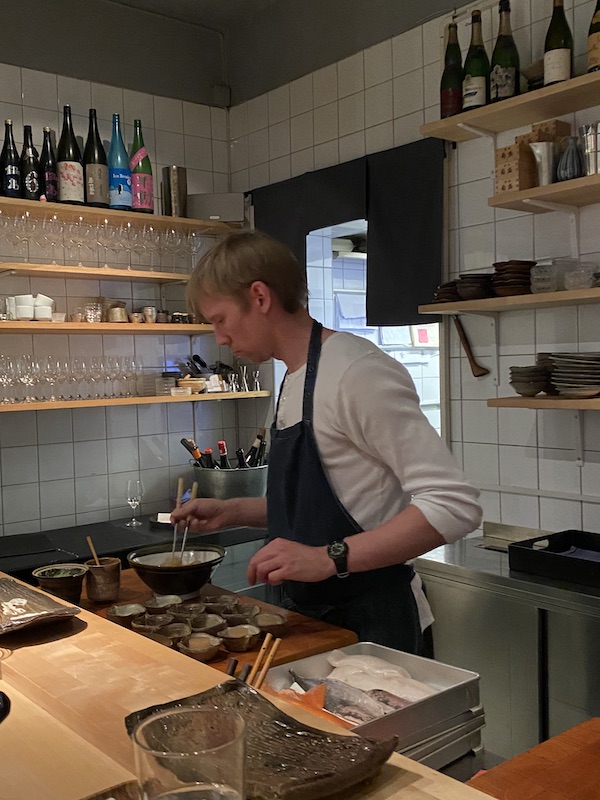
On the other side of the road, tucked away behind a small windowed front is Sushi Sho, an unassuming cosy eatery with an L-shaped bar that seats twelve people. The sushi is served omakase お任せ, meaning the meal is left up to the chef, and he will have selected only the best and freshest produce in season. The food is presented as otsumami お摘み, the Japanese equivalent to tapas, i.e. small dishes to pair with drinks .
The idea at Sushi Sho is that you book a time and you share it with all the other diners. It’s a bit like being invited to a dinner party without knowing the other guests. You make yourself comfortable at the bar and the chefs prepare the food in front of you and serve everyone the same menu at the same time. One platter is followed by another. I lost count but I think there were about 8 or 9 dishes in total. Here, there is no risk for a waiter to forget your first course, or to leave you interminably stranded with no main. Like a ballet performance, your empty earthenware dish is smoothly whisked out stage right and a delicious new course makes an apparition from stage left.
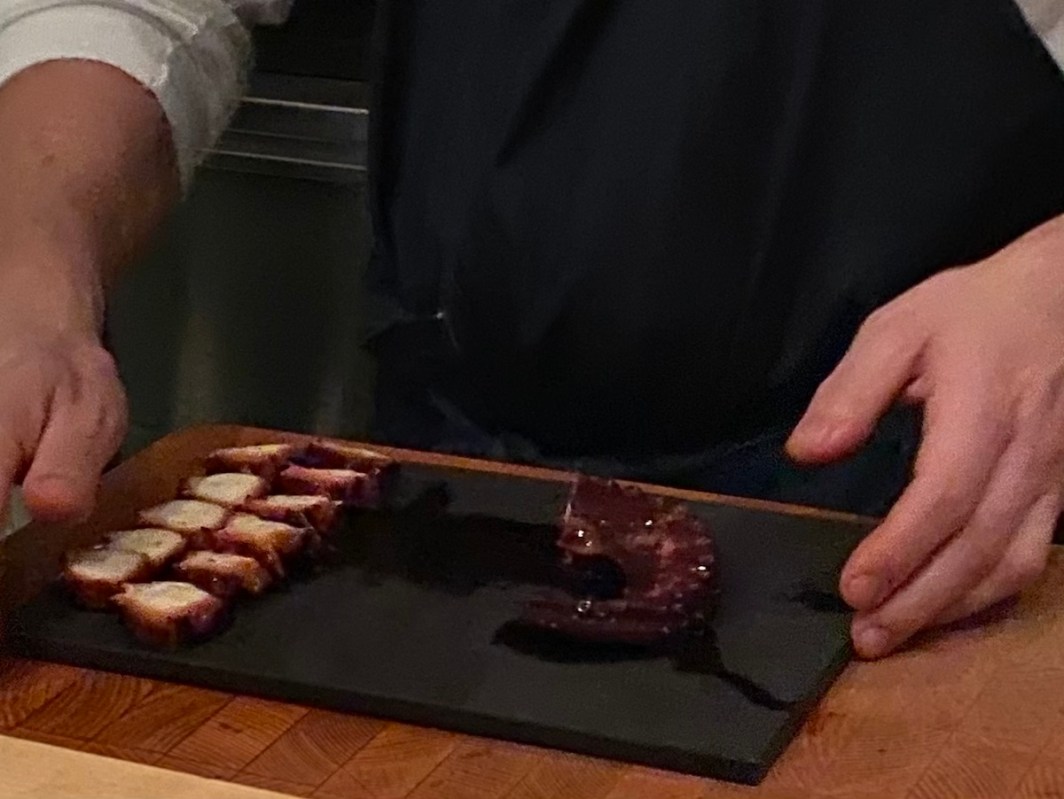
Mean looking glazed octopus at Sushi Sho, Stockholm
So bravely I relinquished all control and let the restaurant decide on both my food and the sake. I say bravely as, like most people, I play it safe and tend to stick to what I know. Furthermore, eating raw fish feels slightly risky and the most comfortable for me has always been salmon or tuna with rice. At Sushi Sho I broke through my mental boundaries and the whole meal was an adventure.
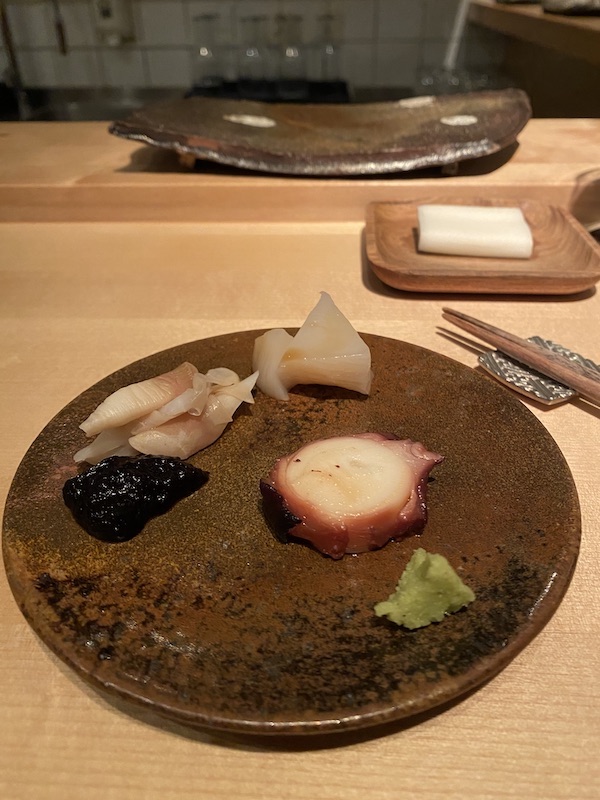
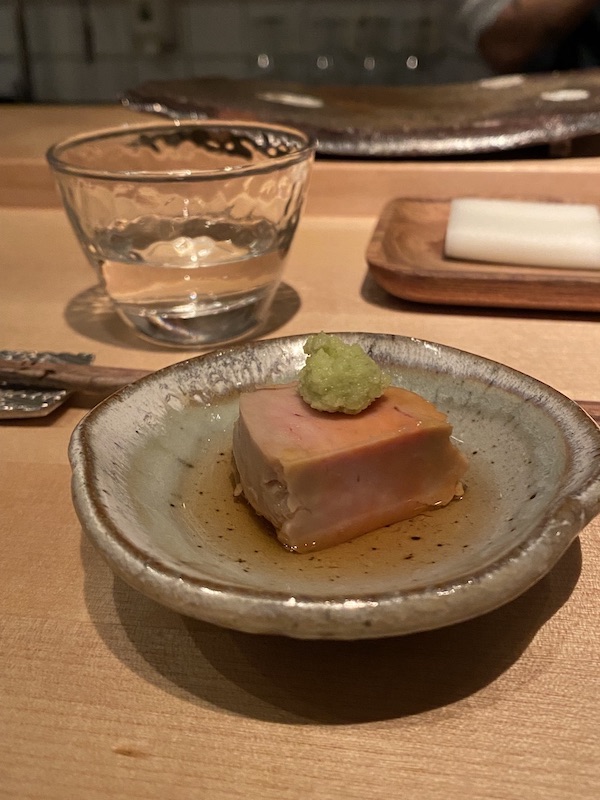
The first dish threw me into the deep end. It was a sashimi 刺身 with the thinly sliced fresh raw fish served with nothing other than a little wasabi 山葵 paste and nori 海苔 dip. No salmon, but razor clams, octopus and scallops. This was followed by ankimo あん肝, monkfish liver, cooked in a sweet dashi and sake sauce. Unknown to me (I had no idea that the flat-faced ugly looking monkfish had a huge liver – what has he been drinking we wonder…), ankimo has become a delicacy and I was struck by the airy and creamy texture and how little it tasted of fish. Another surprise for me was sushi 寿司 or to be more specific nigiri 握り (sushi without seaweed) made with “röding” (char) a typically Swedish fish, that is caught in mountain lakes and streams. Delicious, but my preference went for Sushi Sho’s seabass and yellowtail nigiri.
If fish is the main staple, a few less fish-only dishes punctuated the menu: a wonderful classic cooked daikon 大根 (winter radish) with a white shiro 白 miso 味噌 sauce, and Sushi Sho’s signature dish, a soy cured egg yolk with okra, puffed rice and of course … a little sashimi.
At the end of the meal the chefs offered as an extra some special tuna they had in and let us choose how we wanted it prepared. I opted for sashimi and I have to say it was the best and tastiest raw tuna I have ever had. It was a cut from the fattiest part of the tuna’s belly, otoro, おとろ. The pink flesh is streaked with thin lines of fat that melt in your mouth thereby releasing sweet, savoury and meaty flavours.
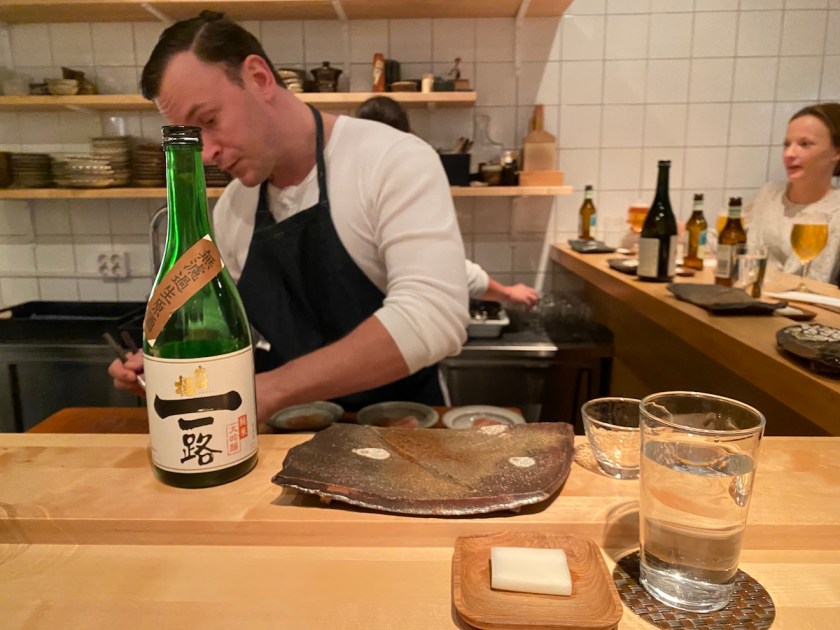
Maybe about so? Preparing tuna at Sushi Sho, Stockholm
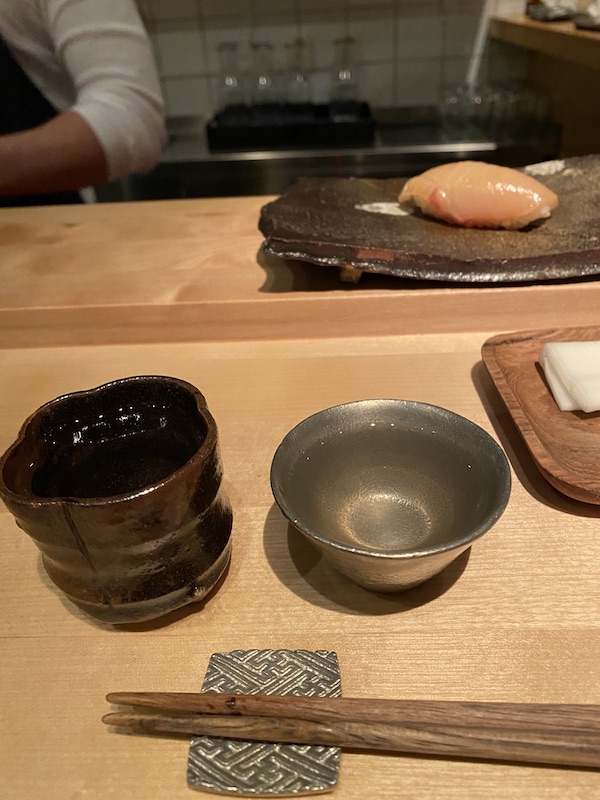
There are a few places in Stockholm that you have to go to if you want to drink good sake and Sushi Sho is one of them. I took the sake package and was not disappointed. It included four different styles of premium sake, nihon-shu 日本酒.
The opening sake was a Junmai 純米 Daiginjo 大吟醸 from the brewer Dewazakura. Delicate, precise, alive, creamy and light in body with very fruity aromas, it was a perfect accompaniment to the sashimi. (Dewazakura Ichiro Junmai DaiginjoMuroka Nama Genshu – Picture: top left)
The second sake was a Tokubetsu 特別 Junmai 純米. Crisp and clean with a neat finish and elegant richness. This palate cleanser of a sake was a good transition from the fish to the daikon. (Hirotogawa Tokubetsu Junmaifrom the brewer Matsuzaki Shuzo in FukushimaPrefecture – Picture: top right)
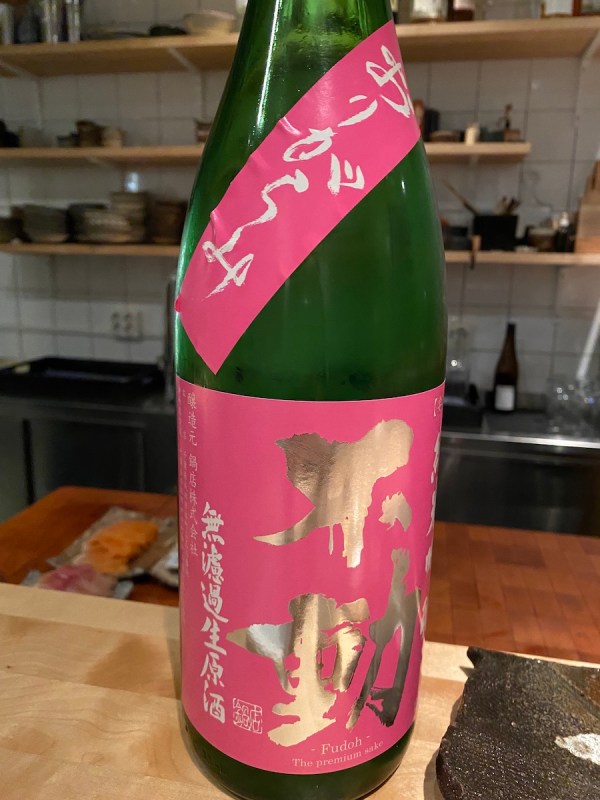
A pretty pink label with white and silver writing was the next sake tasted. As the colour of the label suggests, this is a fun sake, easy to drink and quite popular at the moment. It is an Origarami おりがらみ – as can be read on the neck of the bottle. It is a little cloudy, slightly spritzy, fresh, with very fruity tones, a hint of vanilla and some sweetness. This is a result of the sake being unfiltered 無濾過, unpasteurised 生 and with a high rice polishing ratio. It is also non-diluted 原酒 and at 17% abv, a little higher in alcohol. You can pick up this information through the kanji on the left side of the label. (Fudoh Junmai Ginjo Origarami Nama from the brewer Nabedana in Chiba Prefecture)
The last sake tasted was an earthy Junmai 純米. A memorable punchy orange label, which helps with identification, it is a trophy sake from the same brewer as the first one tasted. The sommelier poured out two glassfuls of the ninhon-shu, one cool and the other warmed, to compare its expression. Junmai sakes are characterful, flavourful, have more body and acidity. They are well suited to be served at room or warmed temperatures. This brings out the ricey and earthy flavours of the sake. In addition to that it procures physical satisfaction on a cold evening. (Dewazakura Dewanosato Junmai)
I am very pleased to have made it to Sushi Sho. The food is outstanding, the sake excellent and last but not least the staff was welcoming, friendly and totally invested in creating the best experience for the diner.
Sushi Sho Upplandsgatan 45 113 28 Stockholm Sweden
The sun is finally out and when that happens Sweden morphs into a different country. Suddenly the streets, parks and gardens are filled with people whose existence one did not even realise during the dark winter months. Smiles, laughter and babble become welcome accompaniments to daily life.
Although there is no confinement here, most citizens are respecting social distancing. Restaurants are open but are having a tough time with many of them going under due to lack of customers.
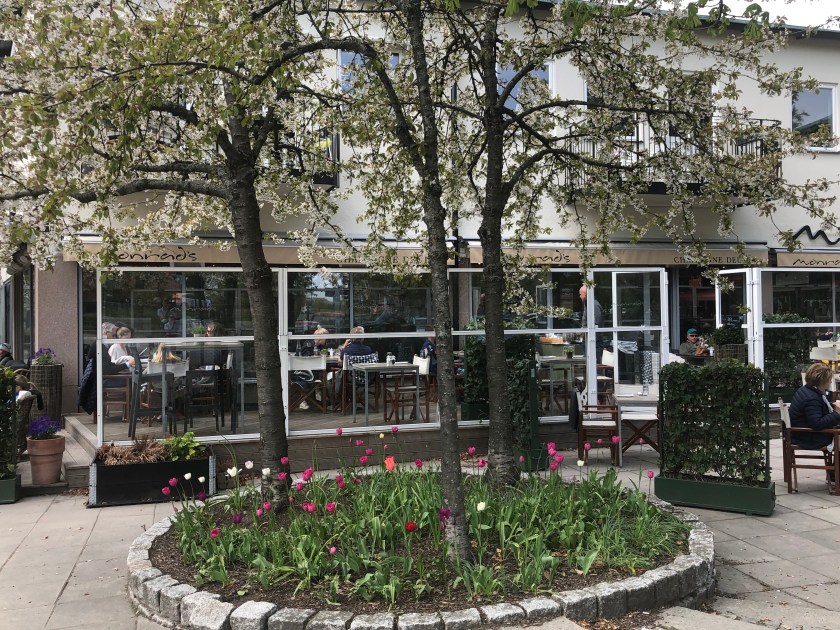
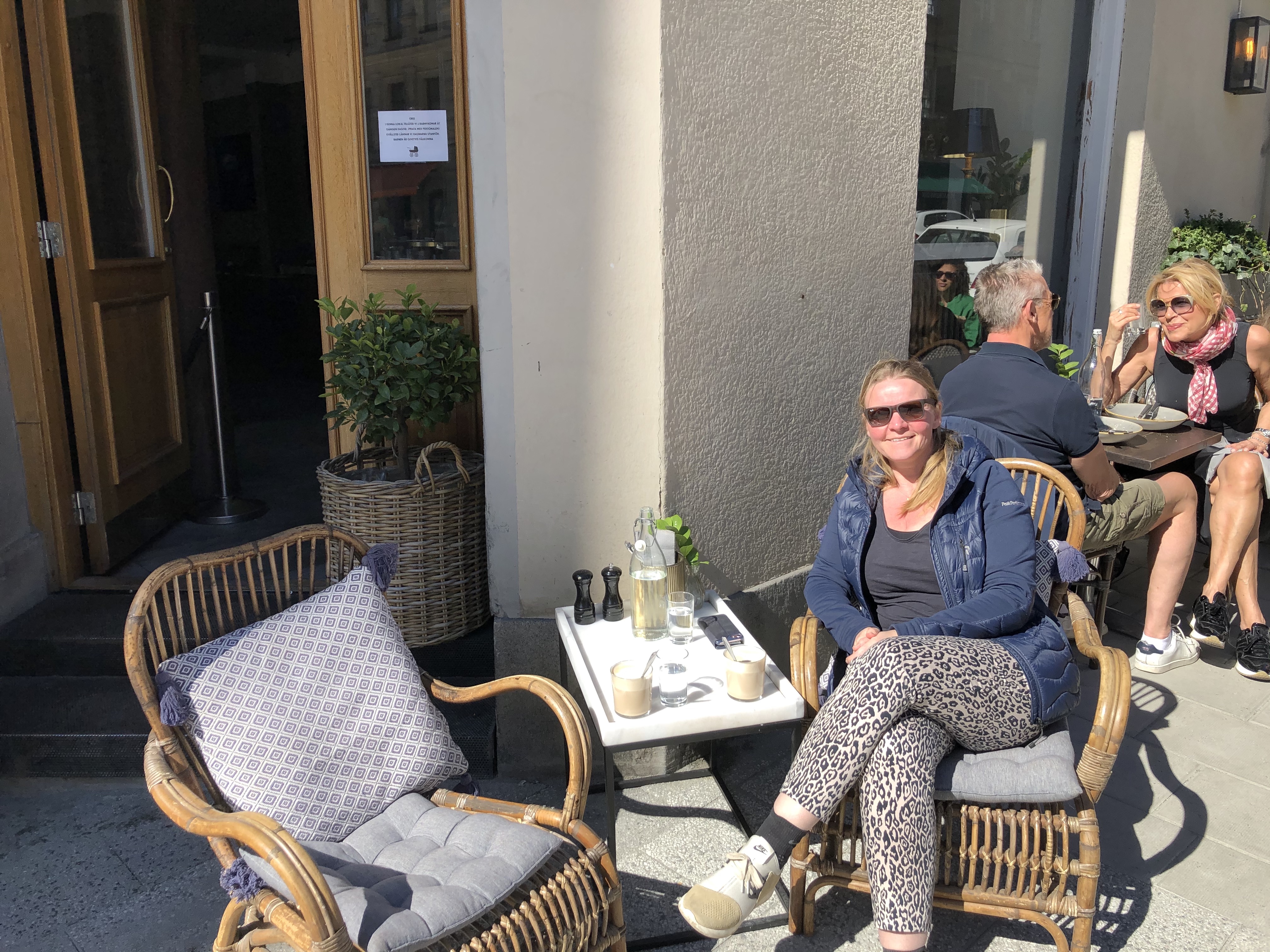
With the arrival of the warm weather, however, restaurant terraces are enticing trade. I myself have been adhering to working from home and restricting my movements to shopping for essentials and walks in nature. One sunny day, when a friend recently suggested coffee, it was with some unease that I agreed to meet on a terrace.
With Corona on my mind, I sat at a distance from my friend. We ordered some coffee and water but were rather taken aback when the waitress pinched the lip of the water glasses with her index and thumb and put them down on the table. She then clasped the coffee cups with her hands, all her fingers curved around the drinking edge of the cup. My friend and I were slightly horrified and worried.
There are elementary rules of hygiene that need to be followed when serving food and drinks. These apply to the professional environment but also to the private home. One such rule is to avoid handling the area of a cup or of an implement such as a knife or fork, that will come into contact with lips and mouth.
Anyone working in the restaurant business should adhere to these basic practices. Any member of staff not aware of such practices should undergo proper training.
If this is important for the general health of the population during normal times, it is even more important during a pandemic. Customers will not return to a restaurant or bar if they fear that they risk catching a virus or a bacteria. Restaurants would do well to ensure that their staff has received appropriate training. By taking such measures they ensure that their customers remain healthy, content, and that they will come back and keep them in business.
Springtime in Stockholm
With Corona on the rampage, most of us have a heightened awareness of potential sources of contamination. Bad practices in restaurants will not go unnoticed. This has to be one positive element amidst the wreckage of the pandemic: the reinstatement of good rules of hygiene. No one forgets washing hands anymore. If one could add to that other basic rules such as restaurant staff refraining from wearing strong scents during service, the dining world would be a better place…
Summer is over. It is back to a new school year, a new start and work. The days have become noticeably shorter and once the sun has disappeared over the horizon the evening air is gently chilling. Daytime, however, is still mostly bright and warm, carrying with it the echoes of holiday enjoyment and carefreeness. “Sensommar”, late summer. The streets of Stockholm are bustling once again with local inhabitants back from time off. The wine trade is in full swing again, presenting the season’s new products and trends. Restaurant terraces are full of happy diners sipping on transitional rosé.
Summer is the period of the year when alcohol consumption is at its highest in Sweden. This would point to a rather responsible society that mainly consumes alcohol during leisure time and vacation as opposed to during the working week. On the other hand, this could also translate as overcompensation for not spreading drinking evenly out over the working weeks resulting in excessive drinking over the summer months.
Drinking in large amounts over a short period, in other words binge drinking, is, as most know, highly damaging to health. Drinking wine in moderation, on the other hand, provides health benefits. In men over 40 and post-menopausal women alcohol wards off the risk of a stroke or a heart attack (Alcohol in Moderation). Moreover if the alcohol is red wine it also protects against free radicals and the ageing process. Or so we have been led to believe…
Not too long ago I came across a 2016/2017 report, Alcohol and Cancer, published by IOGT-NTO, the Swedish Society of Medicine and CERA in cooperation with Forum Ansvar. The report focuses on alcohol as a cause of cancer. It explains how research has clearly linked seven types of cancer – including breast cancer – to the consumption of alcohol. It aims to prevent the occurrence of the disease through increasing public awareness, which in Sweden is allegedly the lowest in the EU.
Whilst most of us are aware of the health damages caused by the overconsumption of alcohol, what did come as a total surprise was that the report sets the danger threshold for alcohol intake at a new low. Moderate or low consumption – not so long ago thought of as the key to a healthy life – according to new findings is putting your life at risk. Alcohol is carcinogenic and damaging to health. With the consumption of alcohol, the risk of cancer is ever present. Reducing the amount of alcohol consumed merely lowers the risk of contracting cancer. “30% of all alcohol-attributable cancer cases in Sweden are caused by moderate or low levels of alcohol consumption” (Alcohol and Cancer, IOGT-NTO, 2016/2017).
Ideas about most things come and go. What’s in today is out tomorrow. Alcohol, a potion with both pleasure inducing and poisonous properties, is a constant subject of controversy. But why has the wind changed? Is consuming alcohol comparable to smoking? Is it a habit that needs to be kicked? I contacted Sven Wåhlin, a doctor and expert in the field of alcohol and health, working at Riddargatan 1, in Stockholm.
Sarah Jefford. Red wine in moderation has for some time now been considered to have health benefits. These are mainly attributed to the antioxidants, the procyanidins found in grapes. What do you think about the recent launch on the Asian market of a wine called Vitis Vinae that has been made from a selection of grapes with high levels of procyanidins?
Sven Wåhlin: There are more anti-oxidants in an onion than in a bottle of wine. Moreover, oxidation isn’t all bad. It also has a positive role. But the negative effects of the alcohol outweigh any positive ones from the anti-oxidants.
SJ. Why has drinking alcohol in moderation, particularly red wine, been considered a contributing factor to a healthy life?
SW. Studies have indeed shown that light or moderate drinkers have a reduced risk of contracting a number of life-style influenced diseases. Determining whether or not this lower risk is due to the consumption of alcohol is complicated. Researchers have been unable to find a perfect reference group. In the main, the evidence for alcohol’s ability to prevent disease is considerably weaker than the evidence for alcohol having a wide range of damaging effects.
SJ. Why has moderate drinking lost its stars?
SW. A new Swedish study claims that information gathered on the health benefits of moderate drinking is wrong. It has revealed that the group of non drinkers – used in comparative studies of non drinking versus moderate drinking – were reformed alcoholics and people abstaining from drink for health issues. As a consequence, the non drinkers have shown up in study results as unhealthy and the moderate drinkers as healthy.
SJ. This view that moderate drinking is a health risk, is it mainly Scandinavian or is it global?
SW. The positive effects of alcohol are increasingly coming under criticism. There are more and more articles being written about the harmful effects of alcohol and lots of corroborative new studies are being published and underway. In the British Medical Journal the positive effects are evaporating. (SJ. This seems in part to be due to the improvement in the methodology and research tools which put into question past results http://www.bmj.com/content/357/bmj.j2353). Back in 2011, the WHO published a “Global Status Report on Alcohol and Health” where alcohol was found to increase the risk of cancer, and notably breast cancer with as few as two drinks per day. There were too many confounders and more research was needed for the evidence to be conclusive but moderate drinking was already suspected of being damaging.
SJ. Is this the end of one or two glasses of wine with a meal?
SW. Consumers need to be informed and should not be led to believe that drinking alcohol is healthy. Alcohol is not good for your body but driving cars is more dangerous than moderate drinking…
It was no surprise. The country whose motto is Liberté, Egalité, Fraternité wanted out of its shackles. Too many rules and regulations, no wiggle room, not enough space for creativity. Winemakers in France had had enough. They had been dreaming of possibilities that they couldn’t realise. They requested carte blanche. And they got it. They got it in the form of VDF. Vin de France. They nickname it the Freedom Appellation.
France is one of the five most important wine producing countries in the world. Along with Spain, China, Italy and Turkey it holds 50% of the world’s total vineyard area (including vineyards for the production of juice, table grapes, raisins as well as wine). France’s share is 11%, Spain’s 13%, China’s 11%, Italy’s 9% and Turkey’s 6% (OIV, April 2017).
As far as wine is concerned, France produced last year 43.5 million hectolitres which is less than Italy (50.9 mio hl) but more than Spain (39.3 mio hl), the USA (23.9 mio hl) and Australia (13 mio hl). France does well on the export side. In 2016 together with Spain and Italy its wines accounted for 55% of the world market in terms of volume. By value France is the leader, with 28% of market share worth 8’255 mio Euros. It is followed by Italy with 19% of market share worth 5’354 mio Euros (OIV, April 2017).
If this all looks rosy for France, the country’s 2016 wine production nevertheless dropped by 7% from 2015, and the latter year’s production was lower than that of 2014 (OIV, April 2017). The outlook for the 2017 harvest has taken a turn for the worst with the terrible frosts that have swept across the country this spring severely damaging parts of Chablis, Champagne, Burgundy and Bordeaux and that will result in lower crops this autumn. Global consumption of wine has been diminishing since 2008. In France, according to Valérie Pajotin, managing director of Anivin, the young have lost interest in wine and need something fresh and new to make them fall in love with it again.
Consumers today have a fabulous choice of wine from all corners of the globe. France rules supreme in the fine wine category but cheap, entry level wine has not been its forte. That has been the New World’s hunting ground. To take Chile and Australia as examples, both countries have shown how good and enjoyable cheap wine can be. France, on the other hand, has been reproached for its inability to offer reliable quality in its cheaper wines. Such inconsistencies have been making international consumers turn away from France and look towards other countries. In France itself, were it not for the lack of choice of vins du monde or non-French wines in French supermarkets and wine shops, sales of non-premium indigenous wine might be having a much rougher time.
Selling French wine has its challenges. One of the main reasons is the labelling and appellation system. A lot of consumers think that the labels are too complicated. How can they understand what they are buying when the bottle does not display the grape variety?
As explained by Laurent Delaunay, president and winemaker at Badet Clément & Co and in charge of marketing at Anivin, “the French approach to making wine is terroir driven”. Wine is a produce, an expression of the characteristics of a specific locality, of terroir. This is reflected in the classification system, i.e. the Appellation d’Origine Protégée (AOP) and Indication Géographique Protégée (IGP). Along with qualitatively designating the terroir of origin, the classification system also regulates the way vines are cultivated and wine is produced. These regulations were initially put in place to ensure quality but they often cannot guarantee it and what’s more, can be restrictive for a winemaker and prevent creativity. This is where Vin de France, the “freedom denomination” comes into play.
Created in 2009 as a rebranding of Vin de Table, the new appellation addresses the shortcomings mentioned above linked to the AOP and IGP appellations of origin. The first big innovation is that the grape variety can be stated on the label. Anivin, the promotional body for Vin de France, brands the appellation “the national French denomination dedicated to grape varietal wines”. This change is a huge step forward for the French wine industry. It can now produce varietally branded wines and compete in that category on the world stage.
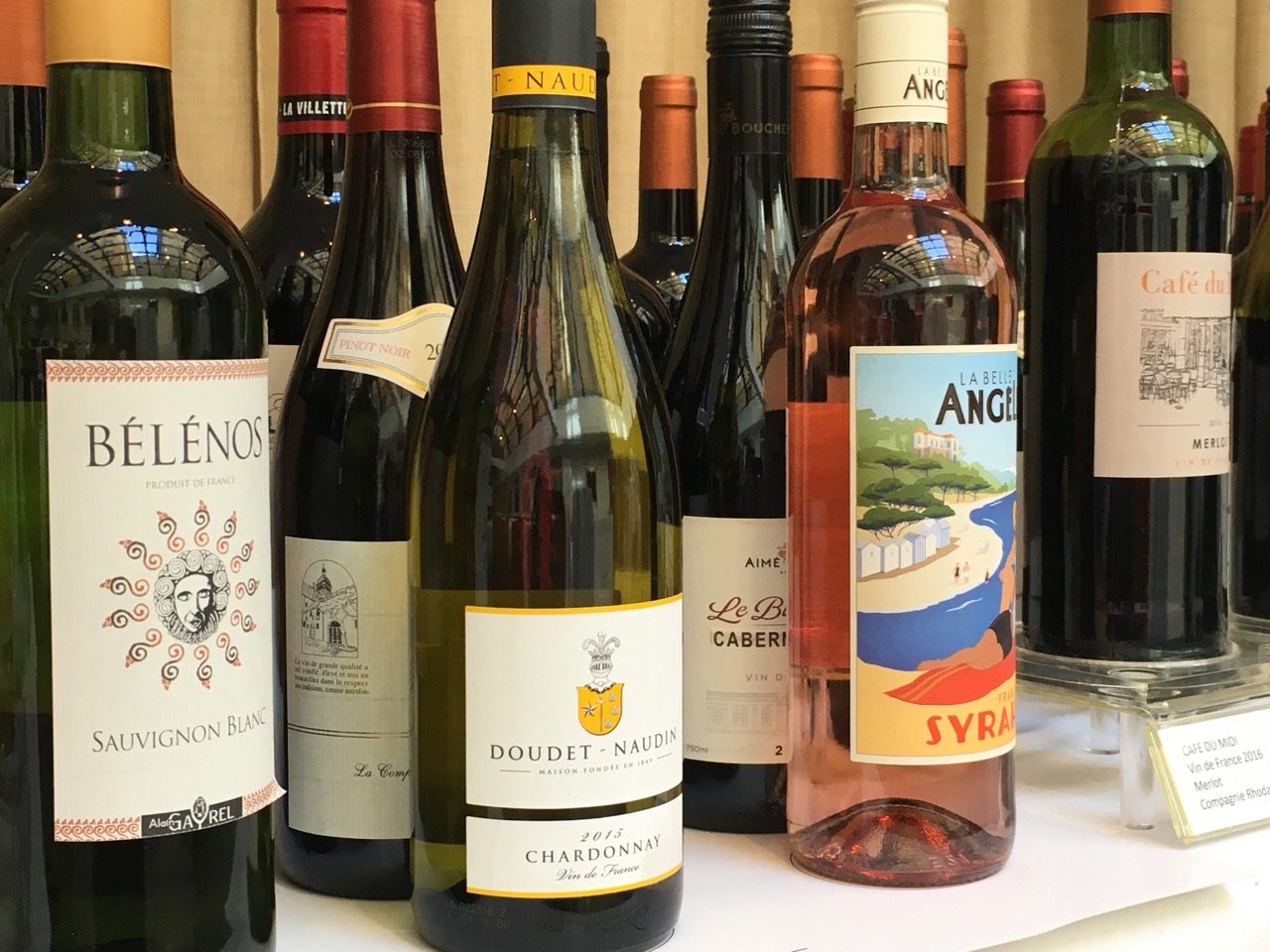
Bélénos Sauvignon Blanc 2016 and La Belle Angèle Rosé de Syrah 2016 are 2 Gold medal winners from the yearly Anivin wine competition
Vin de France, which can also state the vintage on the label – unlike the Vin de Table category – encompasses both single varietals and blends. Blends is where producers can really get creative. VDF wines can be made by blending grapes from different wine regions, from opposing parts of France, from fresh regions with warm ones. Wine designers can put together, for example, Gros Manseng from Gascogny with Vermentino from Provence. They can mix local and international grape varieties; create wines that have not existed before. This not only enables them to be imaginative with the taste profile of their wines but it also allows them to work with the diversity of climate and it gives them the tools to produce consistent quality wines, wines that will retain a similar identity vintage after vintage. This consistency is key in creating strong brands.
Laurent Delaunay: “If you want a brand approach, your wine must not vary too much from year to year and that is what blends help us achieve. French market share has declined. Twenty, twenty-five years ago we didn’t take a brand approach and didn’t listen to the consumer. Now we have Vin de France and it is consumer led. Wines are made according to what consumers want”.
Since its creation in 2009, VDF has been growing in strength. It has doubled its production to 185 mio bottles between 2010 and 2016, and is doing particularly well on the export market, where 70% of its output is directed. Sales to many markets are increasing. Sales to Sweden have risen by 16% from 2015 to 2016. The major part of VDF production is high volume wine with much of it being well made and representing good value for money. The category attracts the likes of big producers such as Castel, François Lurton but also small vignerons, natural wine producers and winemakers who for a variety of reasons either purposefully opt out of an AOP or IGP, or whose creativity is at odds with their appellations of origin. The category ranges from entry level to luxury brands.
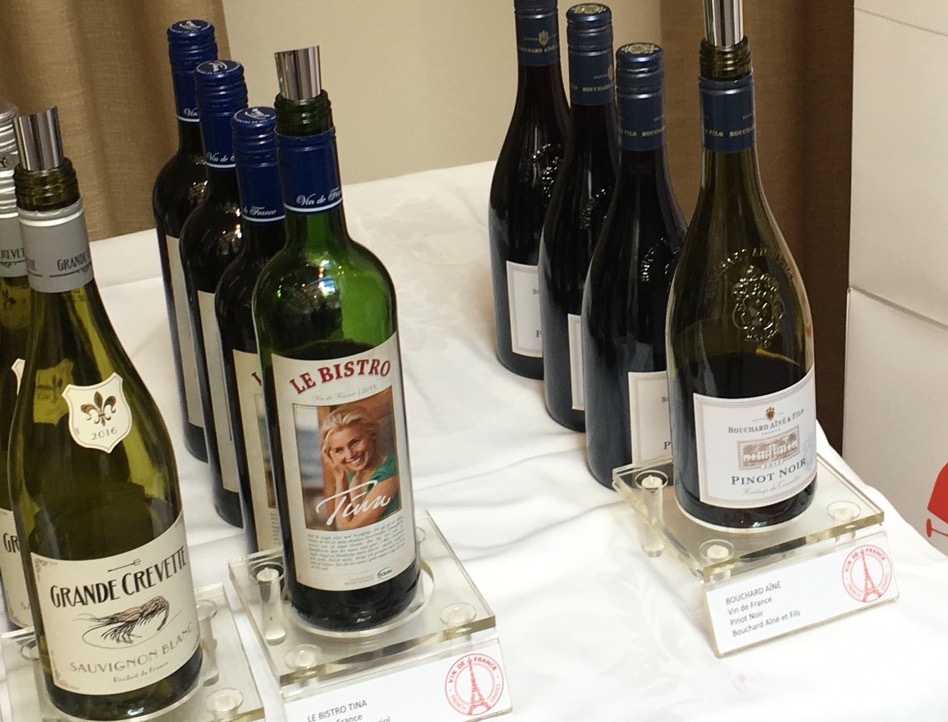
Tina’s Le Bistro, Grande Crevette Sauvignon Blanc and Bouchard Pinot Noir are some of the VDF wines sold in Sweden at Systembolaget
“Vin de France is the way to get into wine. It makes things simple for the consumer and offers value for money. Varietals and brands are easy to recognize and understand” says Valérie Pajotin. “With Vin de France we hope to get the young men and women of our country interested in wine again and of course we would like them to become initiated through French wine rather than through New World or non-French wine. We next wish for them to progress on to more complex and subtle wines, to wines of origin, IGP and AOP wines from France and connect with their land’s rich cultural heritage”. Undoubtedly France’s new President, Emmanuel Macron, would hope for the same. “Le vin, c’est l’âme de la France”, he said in an interview to Terre de Vins (8.5.2017).
I’ll drink to that and to the wine-loving new President of France.
Upon arrival at Stockholm airport, I received an sms from Air France informing me that they were “tracking my suitcase”. I had just come back from a trip to Chile and my suitcase appeared to have missed the Paris-to-Stockholm leg of the journey. I wasn’t unduly concerned, clothes are replaceable – and in this instance Air France would probably be doing me a favour if they were to be lost forever – but in my suitcase I did have six bottles of rather good Chilean wine that I was looking forward to consume.
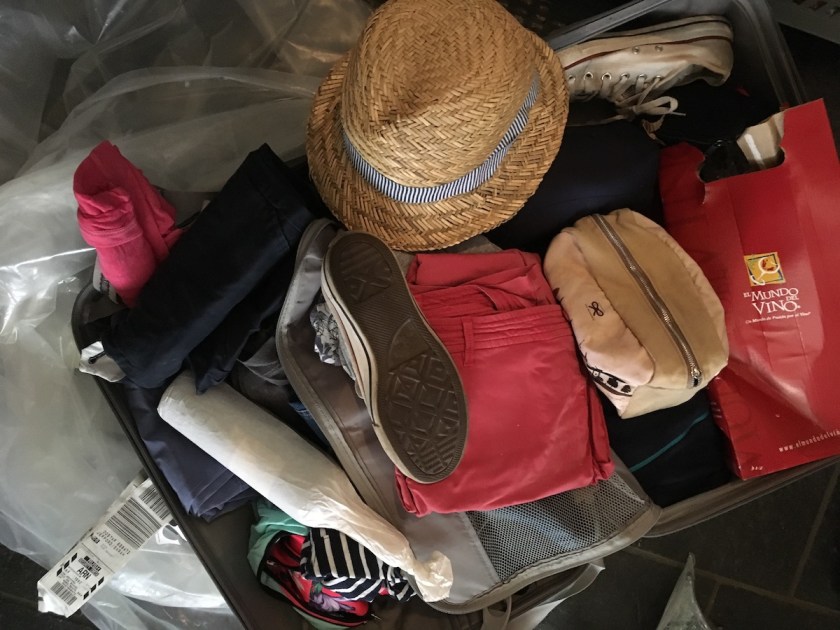
The following day my luggage made it back to Sweden and a courier service obligingly delivered it to my door. Somewhat unsettlingly, though, it came wrapped in a huge thick transparent sack. I removed the plastic – it was reassuringly dry inside – and next unzipped the case. All my clothes were their original colour, no red streaks anywhere, but there was a distinct perfume pervading the air. I initially thought a cosmetic bottle might have leaked until the smell started to make sense. Lees, apples…It was Chardonnay.
Whenever I travel I tend to bring bottles of wine back with me. Usually not just one but many, and in all the years I have been flying and packing wine in checked-in luggage I have only ever had two breakages. In both instances it was, of course, the favourite wine of the lot that got broken and incidentally in a Burgundy shaped bottle.
So what are the best ways to bring wine back home if one is flying?
The simplest and cheapest option is of course to wrap bottles up in socks and clothes and place them in a hardcase bag or a fully packed soft bag. You need to have enough clothes with you to cover the wine and make sure that a bottle is not close to another hard object that could impact and smash it. This is not ideal for short trips nor in warm weather when there will not be enough material to pad out the suitcase. This is also risky as any broken glass and spilled wine will damage the contents of your case.
There are a number of brands that make suitcases specifically for the transport of wine. These suitcases have foam inserts and hold up to twelve bottles of wine. Some suitcases, such as those designed by VinGardeValise, have removable inserts. Room can thus be made for other items, such as clothes, should less than twelve bottles need to be transported. The price for a VinGardeValise on Amazon UK is £249 .
VinGardeValise (www.vingardevalise.com)
Such a suitcase is a perfect choice for a preplanned trip. You know you are going to purchase lots of wine and you are happy to travel with two pieces of luggage: one for wine and one for clothes. Alternatively, the case is shared for clothes and wine, and whatever space is not used for clothes will dictate the amount of bottles that can be purchased. Remember to check what baggage allowance you are entitled to – a fully packed VinGardeValise will weigh 20-23 kg which corresponds to the standard maximum limit per bag on most airlines.
If you are flying out and need to bring perfectly cooled white wine for a dinner party, the Transbottle is the one for you. Made of polypropylene it weighs only 0.6 kg. It can carry three 0.75 l bottles (including champagne sized bottles) and comes with a handy shoulder strap making it easy to have as an extra bag. At €46 (£38) the price is very attractive as well. Unless you are buying wine at a Duty Free the Transbottle will have to be checked in and travel in the hold of the aircraft. This is not a problem as the material is shock resistant and your bottles will arrive shaken but not broken. A €14 (£12) “Travel Kit” sold separately will allow you to securely fasten and padlock the bottle carrier. The Transbottle also comes in a bigger six bottle size.
Transbottle-3 with space for a corkscrew (www.transbottle.com)
The solution that wins my vote when I need to travel with a minimal amount if bags is WineSkin. This is a plastic pouch that is lined with bubble wrap and that seals with a very strong band of tape, thus able to contain any leakage. As it is flat – about 6 mm thick – it takes up no space in your luggage so you can take a whole load of empty ones with you. As its name indicates, when filled with a bottle, WineSkin thinly but efficiently covers and protects it, taking up minimal space in a suitcase. Even a suitcase relatively full of clothes can be filled with a surprisingly large amount of bottles in WineSkin pouches. An American product, WineSkin is now widely available in specialist wineshops and tasting rooms, on their website and on Amazon. A non-reusable single pouch retails at $3.50 (£2.70) and at $9.50 (£7.40) through WineSkin’s website for a pack of three. A pack of five costs £17 on Amazon UK. WineSkin sells a range of different single use and reusable pouches.
Skinny WineSkin (www.wineskin.net)
I personally have been reusing my single usage WineSkin pouches as they offer such good protection and are so convenient, despite the fact that once used they are no longer sealable nor leakproof. Whatever solution you decide on for travelling with wine, do not pack a two-bottle cardboard wine carrier in your suitcase even if the bottles have been specially bubble wrapped and the shop assistant has insisted that the cardboard box was fit for plane travel. You have been warned…
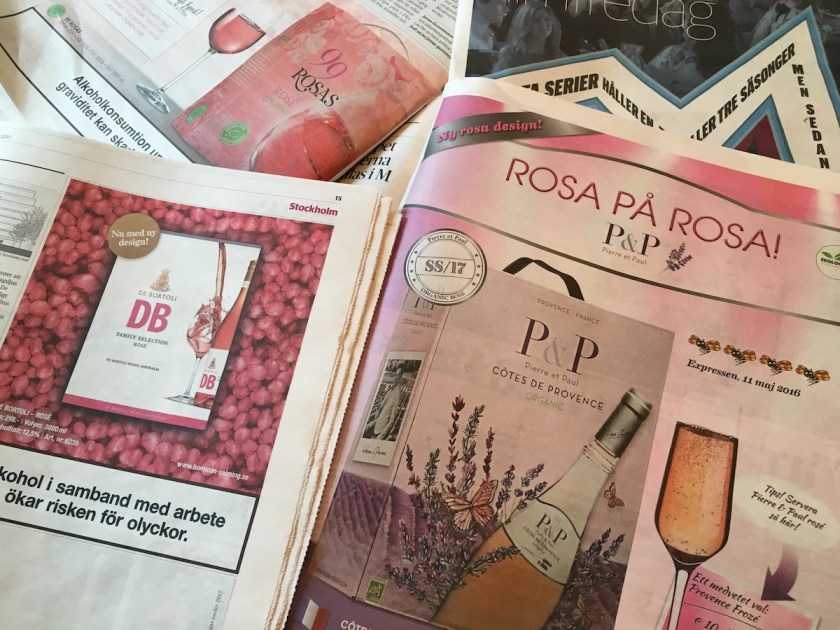
The temperature in Stockholm has been below zero for a number of weeks now but there has been a change in the skies which have gone from grey and gloomy to include some rays of sunshine and moments of blue sky. Warm weather and spring are still a way off but clearly they are on people’s mind, and the newspapers last week-end have been surprisingly full of advertisements for rosé wine! On second thoughts, it probably isn’t so much the call of spring but the fact that Tuesday is Valentine’s day, a day that calls for celebration with all things pink and heart shaped. For those of you who might have forgotten this day, here is a reminder for you to go and buy that card and gift!
In following with the spirit of the moment, here is a little sampler of some of the pink festive beverages that are currently available at most Systembolaget shops in Sweden. All of these are with bubbles, bar one – bubbles being synonymous with fun and festivities. (But what is it with bubbles anyways…).
Pale onion-skin in colour. Dry, fine lively bubbles, aromatics of red and yellow apples, grapes and a touch of red fruit. Quite a full, muscular body, good acidity and plenty of bready, yeasty notes, a good length with a touch of apple skin on the finish.
Champagne is not the only area in Europe to produce sparkling wines in the traditional method. Franciacorta, in Lombardy in northern Italy, is another area that is known for its world-class sparkling wines. This non-vintage wine is made from 60% Chardonnay and 40% Pinot Noir. The fermented wine has spent two years of lees ageing in bottle, giving it those rich toasty aromas. Franciacorta can be quite expensive but this one here is priced at 160 SEK, which is a little more than a good bottle of Prosecco but less than a cheap bottle of Champagne.
A pale intensity of pink. Dry, fine mousse that fades away in the mouth, medium aromas of red and dark fruit, pepper, gravel and toasted bread. A medium body with a slight bitter finish.
Cava is both a region and a style of sparkling wine made through the “metodo traditional” with the bubbles coming from a second fermentation in bottle. It can be elaborated in many different areas of Spain. Most Cava, however, comes from the Penedès region – as is the case for the Monistrol – and is usually a blend of the Macabeo, Xarello and Parellada grape varieties. This rosé is made with 70% Monastrell (aka Mourvèdre) and 30% Pinot Noir.
Light pale pink. Dry with very fine bubbles. Aromas of sweet candy floss, peaches, redcurrants, raspberries, sweet juicy apples, blood oranges. A delicate body, refreshing acidity, a long fruity and biscuity length that tapers gently off.
This non-vintage dry rosé Champagne is a blend of Pinot Noir, Chardonnay and Pinot Meunier and with its pretty pink label undoubtedly a perfect Valentine’s gift.
Different shades of Pink
Richard Juhlin, Non-alcoholic Sparkling Wine, Rosé, France SB 1983, SEK 89
This is an alcohol-free version of a pink sparkling wine from the Swedish champagne expert, Richard Juhlin. Light pink in colour, this sparkler has aromas of baked apples and red fruit. Lively bubbles with a little froth, the body is medium full with good acidity balanced out with a sweet texture. This is a good choice for a non-alcoholic sparkling rosé and the appearance of the bottle and wine is a good look-alike to rosé champagne. The texture of the body without taking the bubbles into consideration is reminiscent of alcohol-free beer. Made from 90% Chardonnay and 10% Pinot Noir.
Barefoot, White Zinfandel, California, USA
8% abv, SB 2215, SEK 70
There is an extra label on the bottle which states “Deliciously fruity” and sure enough, this wine is pure fruit. With a pink screw cap to match the colour of the wine, this bottle contains aromas and flavours of peach candy, apricots, ripe strawberries and blackberries. The alcohol is low, the acidity is medium and the finish is juicy and sweet (33 g/l of residual sugar).
If you want to say it with fruit and are on a low budget, this is the one for you.
Pale pink in colour, aromas of candy floss, orange blossom and raspberries, this is another crowd pleasing party wine that does not break the bank. Pink Moscato is a very popular beverage in Australia. This is something I only recently found out during a blind tasting when I tasted this wine for the first time and did not have a clue where the wine came from… Systembolaget only had this Spanish one on its shelves at the moment. Bubbly, quite full-bodied and very definitely sweet (75 g/l of residual sugar), this low alcohol wine is for those who really like sweet wine. This is a wine to serve as an aperitif.
Lastly, a pink sparkler that is not a wine but a cider: Carlsberg, Somersby, Sparkling Rosé, semi-sweet cider, Sweden
4.5% abv, SB 88741, SEK 18.10
Pale pink, with aromas of pears, gooseberries, and mulberries. This is a sweet cider (77 g/l of sugar) that is nevertheless refreshing thanks to its fine bubbles and moderate acidity.
Enjoy Valentine’s day, whether it’s with rosé, or without…

























 Nordic Wine Blog